This guide explains how the 4ps Kotler framework can structure practical, cost-aware marketing decisions—from product and pricing to distribution and promotion—while keeping execution measurable. Objectively, it outlines the meaning of Kotler’s 4Ps, how teams translate strategy into actions, and what “supplier” and “price” considerations typically require across channels.
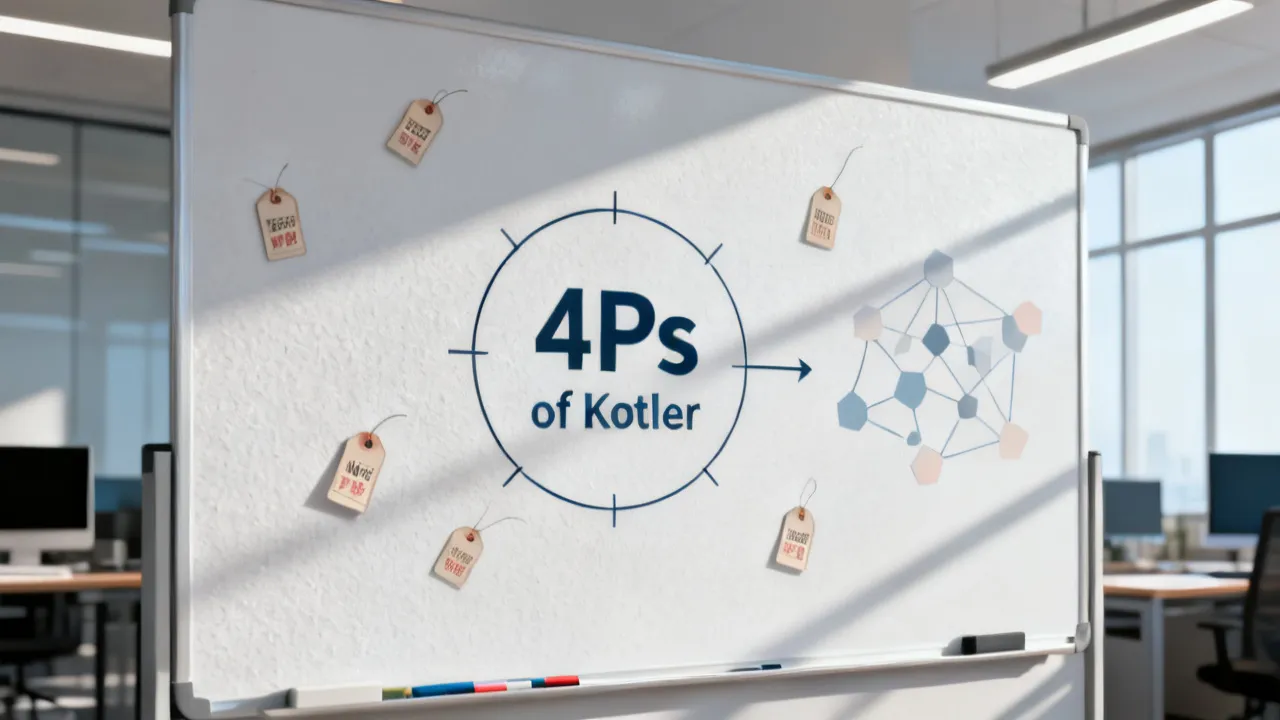
To make go-to-market decisions that hold up under real customer scrutiny, apply 4ps Kotler as a cross-functional planning lens. Start by clarifying what you offer (Product), set a defensible price aligned with value and constraints, ensure your supplier and delivery capacity can support the promise, and then design promotion that communicates the same value story consistently.
When executed well, the 4Ps framework becomes more than a marketing concept: it becomes a coordination system across commercial teams, supply chain, finance, and customer-facing operations. That coordination matters because customers don’t experience “marketing” and “logistics” separately—they experience outcomes.
Throughout this guide, you’ll see how to connect the strategic pillars of 4ps Kotler to day-to-day choices, including common requirements around sourcing, pricing logic, and channel fit. If you’re considering how to budget campaigns, forecast margins, or evaluate supplier readiness, the framework offers a structured way to reason—without relying on guesswork.
The 4ps Kotler framework remains widely used because it forces completeness. Many teams build campaigns first (“promotion”) and then attempt to backfill pricing, packaging, or distribution. The 4Ps reverses that workflow: it encourages planning around customer value, then matching the commercial instruments to deliver it.
At its core, the 4Ps are:
From an industry perspective, the framework’s enduring strength is that it helps you prevent internal contradictions—such as selling a premium product while using inconsistent distribution or discounting in ways that erode perceived quality.
In modern markets—where customers compare quickly, switching costs can be low, and reviews spread instantly—internal contradictions are punished faster. The 4Ps structure helps teams “stress test” offers: if your promotion claims one thing, does your Product deliver it reliably? If your price positions as premium, does your delivery experience match that premium expectation? If your Place model depends on a supplier network, are those suppliers ready to absorb surges in demand?
Another reason the 4Ps remains relevant is that it maps cleanly onto how businesses actually operate. Product owners, pricing/finance leads, supply chain teams, and marketers often speak different languages. The 4Ps gives each function a shared vocabulary. It also supports governance: you can create sign-off checkpoints that ensure alignment before you spend heavily on promotion.
Finally, even when businesses claim to be “customer obsessed,” they still need a practical system. The 4Ps provides that system. It organizes customer value into decisions that teams can execute, measure, and improve.
Within the 4ps Kotler model, Product is not limited to physical goods. It includes service depth, warranties, onboarding, support, and even user experience details that influence perceived quality.
Expert lens: Before you design features, define the “job to be done” your customer is hiring you to accomplish. Then ask whether each product element reduces friction, increases reliability, or improves outcomes. A strong Product strategy is customer-outcome-driven, not feature-driven.
To translate “job to be done” into a coherent offering, many teams start by writing a Product value statement in plain language. For example: “Help customers achieve X outcome faster, with fewer steps, and with less risk.” This becomes the anchor for selecting features, designing packaging, and specifying support.
Typical deliverables for teams:
Because customers compare across alternatives, Product decisions must also consider what competing offers “include” or “exclude.” Where you draw those boundaries can become an advantage—or a source of confusion—if not communicated across promotion.
For instance, consider a product that includes premium support. If promotion suggests “white-glove onboarding” but the Product documentation shows onboarding is limited to self-serve, you risk churn and refunds. Conversely, if you truly provide high-touch support but never mention it in promotion, you may undercharge and underperform because customers never learn about the differentiation.
To avoid these misalignments, mature teams define Product “proof points” that can be referenced consistently in promotion. Examples include:
Another practical dimension of Product decisions is product packaging and tiering. Customers rarely buy “a product” in a vacuum—they buy a package that matches their needs and risk tolerance. Tiering helps you match different segments, but tiering must be designed with clarity:
If your tiers are confusing, promotion will struggle to explain. If promotion struggles, conversion drops. If conversion drops, teams may “fix” it by discounting—only to damage margins and perceived quality. Product clarity reduces that spiral.
Finally, Product decisions should incorporate operational constraints. Even if customers want every feature, you must assess manufacturing complexity, supplier availability, lead times, QA requirements, and support capacity. The best Product strategies are ambitious but feasible; they design for the reality of how Place is executed.
Pricing is often treated as a finance task, but in the 4ps Kotler framework, price is a strategic instrument. It signals positioning, affects purchase friction, and shapes expectations around service and quality.
Expert lens: A pricing plan should answer three questions: (1) What value does the customer receive? (2) What costs and constraints must the business respect? (3) How will the chosen price behave across distribution and promotion?
Common pricing pitfalls:
To keep decisions defensible, rely on internal costing discipline and documented pricing rationale. If you publish prices publicly, ensure you can support the promised availability and terms. Where you negotiate B2B contracts, ensure pricing aligns with service commitments and fulfillment schedules.
One reason pricing often fails is that teams treat it as a single number instead of a system. In reality, price includes:
Customers interpret the “total” price of an experience. Therefore, the 4Ps alignment matters: Product must justify headline and total cost; Promotion must avoid overselling; Place must deliver within promised timelines so that the cost is not “worse” than expected in practice.
To make pricing decisions resilient, many organizations build scenario models. They ask: what happens to margins if demand is higher than forecast? What happens if supplier lead times shift? What if promotional spend increases and conversion improves faster than capacity? In other words, can you protect your pricing strategy under real-world variance?
Another modern consideration is that customers have easy access to alternatives, including substitutes and “good enough” alternatives. This puts pressure on pricing to remain coherent with value. If you price too low, you may attract price-sensitive customers who demand more support and generate lower lifetime value. If you price too high, you may attract customers who expect excellence but leave quickly if any part of the experience is inconsistent.
Value-based pricing requires clarity on how customers measure value. Teams often assume customers value features, but customers may value outcomes, risk reduction, or convenience more. Pricing should align with the dimension of value your Product actually improves.
For example, in B2B contexts, buyers may be less sensitive to a higher unit cost if the solution reduces downtime, ensures compliance, or shortens deployment timelines. In consumer contexts, buyers may pay more for reliability, ease of use, and strong support.
Finally, price strategy should be designed with the promotion calendar in mind. If you run aggressive promotions that discount heavily, customers learn to wait. That can reduce full-price sales and increase operational complexity. The 4Ps encourages planning consistency: promotion should be supported by Product capacity and supplier readiness, while price behavior should reinforce the brand promise rather than conflict with it.
In the 4ps Kotler model, Place is distribution: where the product is available and how it reaches customers. In real operations, this immediately involves supplier relationships—whether you manufacture, source, or rely on third-party logistics.
Expert lens: Treat supplier readiness as part of your marketing plan’s feasibility. If promotion creates demand faster than suppliers can fulfill, the outcome is reputational damage: delayed delivery, cancellations, and customer support overload.
For many businesses, “Place” includes multiple layers:
When teams mention supplier selection, they often focus on price alone. In practice, you should evaluate supplier capability using criteria such as reliability, quality consistency, lead-time performance, compliance standards, and responsiveness to change requests.
To make Place truly executable, teams should establish measurable service levels across the supply chain. It is not enough to say “we deliver quickly.” You need clarity on:
Requirement to document: define minimum inventory/lead-time assumptions that marketing campaigns will respect. If your promotion plan assumes fast fulfillment, your supplier agreements and logistics capacity must reflect that assumption.
In many cases, the key supplier risk isn’t just total availability. It’s variability. Even if you can meet average demand, a promotional spike may create bottlenecks. The 4Ps framework supports building a buffer strategy that is consistent with your pricing and product promise.
Consider a scenario where promotion is scheduled for a seasonal event. Marketing may forecast an uplift, but suppliers might have longer lead times during that period due to capacity constraints or raw material scarcity. If Place isn’t planned for that reality, the customer experience breaks—customers see delays, support tickets rise, and refunds increase. Over time, that can hurt your brand and increase the cost of future acquisition.
To reduce this risk, mature organizations coordinate at least four planning horizons:
That coordination turns the 4Ps from a marketing model into a feasibility engine.
Supplier decisions also interact with pricing and promotion. If you choose a supplier that has a higher unit cost but better reliability, you may need pricing to reflect that value. If promotion promises “always in stock,” then supplier reliability must justify that promise.
In addition, compliance and quality standards belong in Place planning. Customers may not see supplier audits, but they feel the results. Poor quality can create returns, replacements, and support costs that erase margins and harm customer trust.
Therefore, supplier readiness should be reviewed as part of the Product promise. The Product promise includes not only product specifications but also consistency in quality and acceptable defect rates.
Promotion is where 4ps Kotler becomes visible to customers. But strong promotion doesn’t mean louder advertising—it means consistent messaging that matches your Product and Price logic.
Expert lens: For each customer segment, ensure your promotion clarifies: (1) the problem you solve, (2) why your product is differentiated, (3) what the customer receives, and (4) what the purchase terms imply (availability, warranty, support, delivery).
Promotion channels to align with “Place”:
Remember: a promotion campaign is only as effective as the customer’s ability to complete the purchase experience. If a customer clicks “Buy” but inventory is unavailable, the campaign produces churn rather than revenue.
In modern digital channels, the “promotion” part of the funnel continues after the ad click. Landing pages, checkout flows, confirmation emails, and delivery updates are all part of the promotional promise. Even if the ad is perfect, poor landing page messaging or confusing shipping terms can break the value story.
To align promotion with the other 3Ps, teams often build a “message-to-execution map.” This map links each claim in promotion to the internal owner and operational deliverable. For example:
This approach reduces the risk that marketing and operations live in different realities.
Promotion also needs to match the customer’s stage in the buying journey. Top-of-funnel campaigns may focus on awareness and problem recognition, but mid- and bottom-funnel content must translate the Product value into purchase-ready information: pricing clarity, compatibility details, proof, and expected delivery timelines.
Another common issue is that promotion sometimes exaggerates novelty. Customers are skeptical and compare across options. If your Product doesn’t deliver differentiation, customers may perceive the message as marketing spin. That perception can be difficult to reverse.
Therefore, promotion should be built on credible proof points. Proof may include:
Good promotion doesn’t just persuade—it reduces uncertainty.
Finally, promotion should be designed around the economics of acquisition and fulfillment. If demand increases due to a campaign, can supplier capacity handle it without causing delays? If delays happen, will customer support handle the surge? If refunds increase, what does that do to margin and lifetime value? The 4Ps framework encourages answering those questions before scaling.
If you’re marketing near major urban areas, you often face higher customer expectations for convenience and responsiveness. Even without naming a specific city or country, teams typically adapt by tailoring delivery options, customer service tone, and promotional timing to local consumer behavior—such as shopping rhythms, weekend purchase patterns, and trust signals valued in that market.
Operationally, this means your “Place” plan should match what customers expect locally: shipping speed, return policies, and customer support availability. For “Promotion,” cultural nuance shows up in how claims are framed, what proof is emphasized (reviews, certifications, demos), and how offers are explained during the buying journey.
If location-based constraints exist, build them into your campaign assumptions early so that Product, price, and supplier capacity remain consistent with customer expectations.
Local adaptation is also about language and interpretation. The same product message can be interpreted differently across markets due to terminology differences, regulatory expectations, and cultural norms around advertising. Teams should validate claims for compliance and accuracy to avoid reputational risk.
Price localization may also matter. Even if the product value is consistent, customers may compare using local price references. Currency conversion and taxes can affect the perceived price. Additionally, local competitive intensity may influence how aggressively you can discount without damaging brand perception.
To keep localization aligned with the 4Ps, teams can separate “core value” from “execution details.” Core value includes the Product outcome and the differentiation you can sustain. Execution details include delivery promises, support hours, payment methods, and promotional channels that match local behavior.
For example, in a market where customers prefer cash-on-delivery or installment plans, price presentation must be adapted while still reflecting the cost structure and supplier constraints. Place execution might require local logistics partners. Promotion should emphasize proof and terms in a way that matches local trust dynamics.
When you treat localization as a modification of execution rather than a contradiction of value, you reduce the risk of misalignment.
The table below compares common decision contexts and the conditions under which the 4ps Kotler framework is very useful. It also lists practical requirements teams should confirm before scaling execution.
| Decision Context | How 4ps Kotler Guides the Choice | Source/Requirement | Conditions to Verify |
|---|---|---|---|
| Launching a new product line | Defines Product scope, pricing tier, channel availability, and promotion message alignment | Marketing planning methodology based on classic 4Ps structure | Confirm supplier lead times, quality specs, and realistic inventory buffers |
| Adjusting price due to cost changes | Links price changes to Product value perception and Place/promotion tactics | Pricing strategy principles from marketing research and pricing literature | Validate margin impact and avoid channel conflicts; ensure promotions don’t promise what price undermines |
| Expanding distribution channels | Tests Place readiness while keeping Product experience consistent | Channel strategy approaches in marketing operations | Ensure supplier and logistics SLAs support promised delivery; verify returns handling |
| Running brand or performance campaigns | Aligns promotion claims with Product features and price positioning | Integrated marketing communication top practices | Confirm landing pages, stock status, and service expectations match ad messaging |
| Improving conversion without brand dilution | Uses coherent messaging and consistent offer framing across 4Ps | Conversion-rate optimization and funnel alignment practices | Measure by segment; confirm fulfillment and customer support capacity |
While the table provides a quick scan, the deeper value of the 4Ps framework emerges when you use it as a diagnostic tool. If performance is below expectation, you can isolate where the misalignment is occurring rather than assuming “marketing is the problem.” For example, a conversion drop could be driven by Place friction (inventory availability), Product clarity issues (customers don’t understand differentiators), Price mismatch (customers perceive poor value), or Promotion-message mismatch (claims aren’t supported on the landing page).
By using the table as a starting point, teams can quickly decide which “P” needs extra rigor and which operational assumptions must be rechecked.
Below is a structured approach you can use to plan and review a marketing initiative. Treat it as a checklist—each step includes decision conditions you should confirm before launch.
To make the checklist actionable, teams can implement “gates” at key steps. For instance:
These gates reduce the risk of “late-stage surprises,” such as discovering supplier lead times were underestimated or realizing that a promised delivery timeline is not achievable for the chosen channel mix.
From a commercial strategy standpoint, the very common failure mode is partial alignment. Teams may execute excellent promotion while neglecting supplier readiness or underestimating service capacity. Others may choose a premium price but ship inconsistent quality, confusing customers and weakening retention.
To avoid these issues, experts typically insist on cross-functional sign-offs:
This approach makes the 4ps Kotler framework a governance tool, not only a planning model.
Experts also emphasize the importance of feedback loops. Alignment at launch is only the beginning; operational reality evolves. Suppliers change lead times, markets shift, and promotions can create unexpected demand spikes. Therefore, teams should set up monitoring that detects misalignment quickly.
Examples of early warning signals that typically reveal which “P” is misaligned include:
When warning signals appear, experts recommend using a “root cause ladder.” Instead of debating symptoms (“marketing underperformed”), teams diagnose systematically across the 4Ps. This reduces blame cycles and increases learning velocity.
Another expert consideration is to make the customer journey explicit. The customer journey includes pre-purchase research, purchase decision, onboarding, ongoing usage, support interactions, and eventual replacement or referral. Each stage involves some combination of Product, Price, Place, and Promotion.
For example, an onboarding experience that is slow or unclear can undermine Product differentiation. A delivery promise that is frequently missed can negate a premium price strategy. A promotion that highlights a feature that isn’t available in the purchased tier can increase returns and damage trust.
Experts commonly address these issues by defining “truth standards”—the set of statements and expectations that must remain accurate across all touchpoints. Truth standards can include inventory transparency rules, warranty terms, service-level commitments, and delivery timelines. Once truth standards are defined, marketing and operations can coordinate more effectively.
It refers to the 4Ps of marketing associated with Kotler: Product, Price, Place (distribution), and Promotion. The framework helps teams align what they offer, how they price it, where customers can access it, and how they communicate its value.
Your price signals value. If your promotion emphasizes premium quality or premium service, your pricing and product experience must be consistent. Otherwise, customers may perceive the offer as misleading or inconsistent.
Supplier capacity affects whether your “Place” strategy can deliver what promotion promises. Lead times, quality consistency, and fulfillment reliability are operational foundations for distribution and customer trust.
Yes. Product still includes the full user experience, price includes subscription or pay-per-use logic, place includes online channels and onboarding pathways, and promotion includes messaging and conversion funnel design. The principles remain the same.
Common signs include high ad clicks but low conversion (often Place or Product clarity issues), strong early interest but poor satisfaction (often Product/service mismatch), or frequent customer complaints about delivery (often supplier/fulfillment mismatch).
No. Use the step-by-step diagnostic approach to determine which P is causing the problem. Sometimes improving Product clarity is enough; other times price testing or supplier/fulfillment adjustments are required.
When teams treat 4ps Kotler as an integrated decision system, they can reduce contradictions between what customers are promised and what operations can deliver. By thoughtfully defining Product, setting a defensible price, ensuring supplier and distribution readiness, and designing coherent Promotion, you build a go-to-market plan that is both strategic and operationally realistic.
Use the comparison table and step-by-step guide as your planning discipline, and keep reviewing performance through measurable outcomes. Over time, this transforms the 4Ps from a textbook concept into an execution advantage.
Striking the Perfect Balance: Navigating Premiums and Out-of-Pocket Expenses in Senior Insurance Plans

Explore the Tranquil Bliss of Idyllic Rural Retreats

How to Make Lasting Memories at Disneyland Attractions

4rkojvsx Technology: Industry Insights and Buying Guide

Affordable Phones and Plans for Seniors

Affordable Full Mouth Dental Implants Near You

Unlock the Top Kept Secrets to Finding Your Ideal Dentist for Flawless Dental Implant Results!

Discovering Springdale Estates

Unveiling RS Sul Telecom Services


Exploring the Retipster Club Advantage
The Retipster Club is an invaluable resource for real estate investors, offering a plethora of insights, tools, and community support to boost investing endeavors. Aimed at helping both novice and seasoned investors, the club provides educational materials, success stories, and expert strategies tailored to the ever-evolving real estate market landscape. Dive into this analysis to understand the manifold benefits the Retipster Club offers to enhance real estate success.

Navigating the Retipster Club
This article delves into the unique offerings of the Retipster Club, a community designed for individuals interested in real estate investment, providing educational resources and networking opportunities. Discover how the club supports its members through expert advice, comprehensive guides, and a robust community platform, all tailored to foster insightful and profitable investment strategies.

Pmoc Abrava: Practical Procurement and Quality Considerations
This guide explains how to approach Pmoc Abrava procurement with a quality-first, compliance-minded process. “Pmoc Abrava” is discussed as a term used in sourcing contexts, covering typical decision factors such as specification clarity, supplier capability, documentation, and handling requirements—using an objective framework for safer purchasing, risk control, and consistent performance.
Unveiling Grunig & Hunt's PR Models
This article explores the seminal work of Grunig & Hunt in developing models of public relations. The Grunig & Hunt models, fundamental to understanding PR theory, provide insight into the strategic approaches and methodologies utilized in the field. Each model offers a distinctive perspective on communication and engagement strategies, relevant to both academic discussions and practical applications.
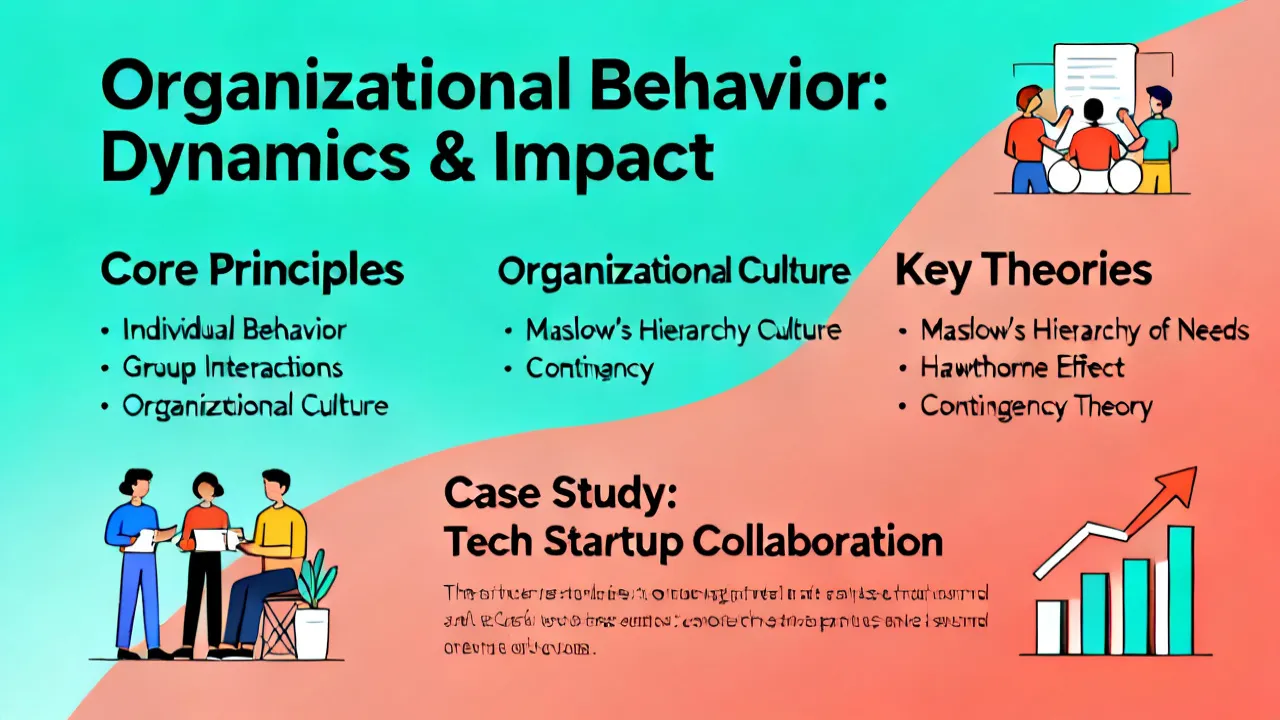
Understanding Organisational Behaviour Slideshare
This article delves into the significance of Organisational Behaviour Slideshare for both educators and professionals. Organisational Behavior is a field that examines the impact individuals, groups, and structures have on behavior within organizations, aiming to improve an organization's effectiveness. With Slideshare's platform, these insights are easily shared, promoting a collaborative learning environment.

Understanding Ltda Epp for Supplier and Compliance Decisions
Learn how “Ltda Epp” impacts supplier selection, contract structure, and compliance planning. This guide explains, in objective terms, what the label typically signals in company registration and how it can affect procurement processes, risk checks, and document readiness. It also frames practical conditions, comparison points, and decision steps to help you evaluate suppliers with clarity and consistency.