This guide explains how to approach electronic supply sourcing when you have an inquiry tied to 06110695394, using objective evaluation methods for suppliers, specifications, and pricing. Background context covers why part identification, documented lead times, and compliance checks matter, and how buyers can reduce project risk while improving procurement clarity.
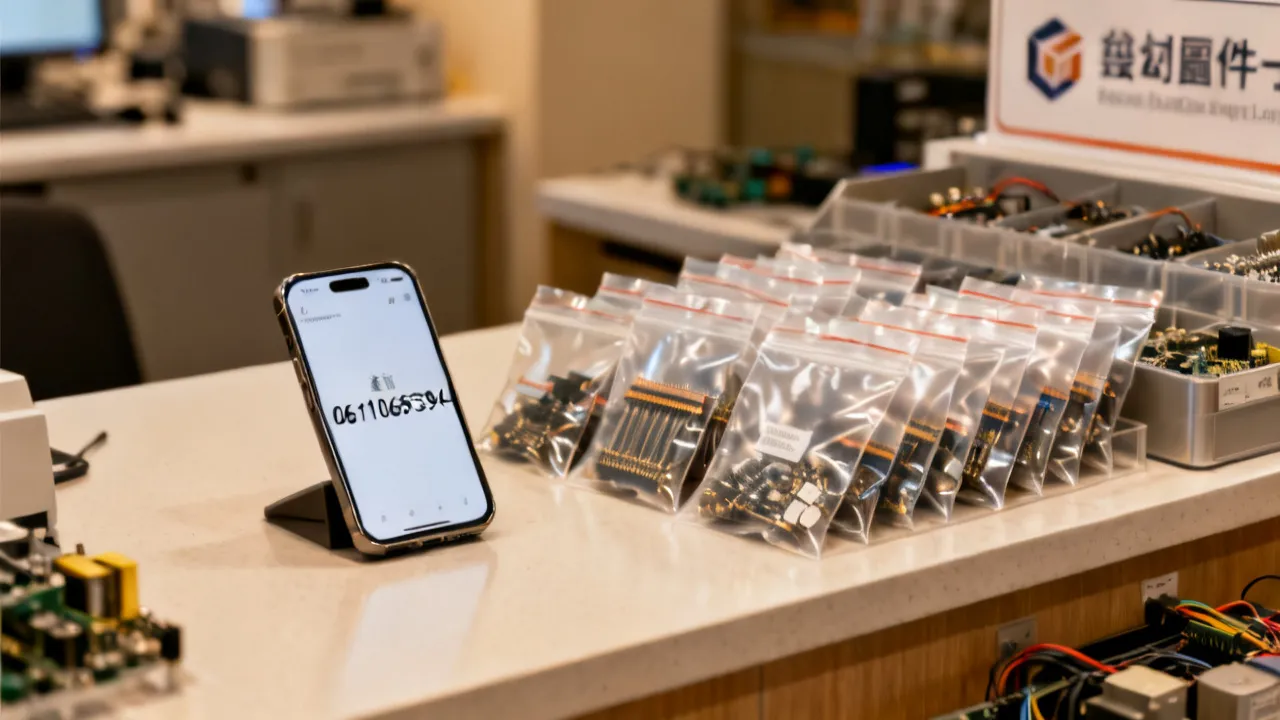
If your request references 06110695394, treat it as a traceable lead and build your procurement process around documentation, verifiable specifications, and transparent procurement terms. In practice, the fastest path to confident buying is not “finding the low price option,” but validating that the supplier can consistently deliver the correct components (or service) at the stated commercial terms, with acceptable delivery schedules, quality evidence, and clear after-sales handling.
For many procurement teams, the number attached to an inquiry functions as an internal tracking marker—useful for referencing the exact conversation, quotation, or item list. Your immediate goal should be to confirm what the number is associated with: product family, configuration, compliance needs, packaging requirements, and the expected delivery window. Only after that should pricing be compared across suppliers.
In well-run purchasing organizations, a reference number is never treated as a mere “subject line.” It is treated as a key that ties together (1) technical identity (part number/revision/configuration), (2) commercial identity (unit price basis, MOQ, packaging, delivery terms, quote validity), and (3) quality identity (traceability expectations, inspection approach, evidence to be delivered with shipments). When those three identities are linked, procurement decisions become defensible during internal reviews, customer audits, and supplier dispute resolutions.
To make 06110695394 a practical anchor rather than a bureaucratic label, you should explicitly map it to the procurement record. That means ensuring your internal documentation references the same scope used by the supplier. In practice, that includes capturing the supplier quote version (if the supplier issues multiple quotes), capturing the requested quantity and packaging expectations, and capturing any engineering notes you provided—such as acceptable substitutes, revision constraints, ESD requirements, shelf-life considerations, or any required test/inspection standards.
Many teams also overlook that suppliers may interpret numeric inquiry references differently. Some distributors use reference numbers to track customer requests across channels, while manufacturers may use similar identifiers to link internal sales orders or back-office processes. If you assume the identifier “means X” without asking the supplier to restate the scope, you may end up comparing incompatible offerings. Therefore, early verification saves time later.
Finally, consider compliance and audit-readiness as part of “critical sourcing focus.” If your organization must demonstrate due diligence—whether for automotive supply chain integrity, medical device compliance processes, industrial control systems, or regulated consumer electronics—your procurement file must show that you requested the right documentation and that you evaluated supplier claims. A reference number like 06110695394 often becomes the backbone for that evidence trail. Without linking it to what was actually ordered and what was actually quoted, the audit trail can be incomplete even if the hardware turned out correct.
When you search for suppliers related to the identifier 06110695394, your evaluation should be structured like a technical purchase—not a casual vendor chat. Start by verifying:
In professional procurement environments, these points reduce rework, prevent system mismatches, and improve predictability. Even when the item is straightforward, mismatched revisions and unclear substitution policies are frequent causes of cost overruns. For electronic components, “it works” is not always enough—performance margins, labeling differences, packaging differences, and even subtle revision-specific changes can affect downstream integration and compliance.
Supplier discovery, in this context, means more than identifying who sells the item. It means confirming who can reliably deliver that item in the exact form your production line expects. For example, an integrated circuit might be sold under the same visible part number but different marking schemes may correspond to different manufacturing lots or screening levels. Resistors might be similar values but differ in tolerance grade or temperature coefficient. Connectors might physically fit but differ in plating thickness, current rating, or latch geometry. Without discovery that goes beyond marketing claims, you may discover the incompatibility only after assembly test failures.
To make supplier discovery effective, ensure your early communications ask for verifiable evidence rather than generic assurances. “We have good quality” does not help. What you need is the supplier’s documented approach to traceability and inspection. If the supplier can provide a certificate of conformance (CoC), test report, material traceability report, or lot/batch traceability mapping, your internal receiving inspection becomes easier and your risk decreases.
Also, evaluate the supplier’s responsiveness in the way you would evaluate their technical competence. If you ask two follow-up questions—such as revision confirmation and packaging/handling expectations—and they respond inconsistently or incompletely, it signals process weakness. Weak process tends to manifest later as delays, shipments without correct paperwork, missing documentation, or difficulty in initiating RMA.
In electronic procurement, supplier discovery should also include attention to how the supplier handles obsolete or scarce inventory. If 06110695394 is associated with a component that may be end-of-life or subject to allocation, you should discover the supplier’s obsolescence strategy: whether they can provide direct manufacturer supply, verified last-time-buy stock, controlled substitution rules, or documentation that demonstrates authenticity and traceability.
Consider that supplier discovery is also an operational exercise. You want to know whether their processes fit your organization’s constraints. For example, some suppliers can ship quickly but do not provide CoC documentation reliably. Others provide documentation but require longer lead time. A disciplined discovery process helps you choose the supplier whose operational behavior matches your production urgency and compliance requirements.
In sourcing workflows, people often jump straight to “price,” but for electronics procurement, pricing is meaningful only when it’s tied to the same technical scope and commercial conditions. When you request “price information,” ask for a quote that explicitly states what is included. For example:
To keep comparisons objective, normalize quotes to the same unit basis and include the same “apples-to-apples” conditions. If two suppliers provide different packaging or different revision status, a unit price comparison becomes misleading.
Overcommitting typically happens when buyers sign purchase agreements before fully understanding pricing scope. In procurement terms, this is often a mismatch between (1) “headline unit price” and (2) “total delivered cost” or “total cost of ownership.” Total cost can include quality testing costs, rework costs, and downtime costs if components fail integration testing. In regulated or customer-facing environments, it can also include the cost of additional documentation, re-certifications, or compliance gaps.
One practical step is to request a quote breakdown that explicitly lists each cost component. For example, a “unit price” may exclude packaging, while the supplier charges packaging separately. Similarly, inspection may be included as a basic incoming visual check but not as functional testing. If your acceptance criteria require functional test evidence, then you should request what that test evidence costs and how it is documented. If the supplier provides functional test at no cost, that should be stated clearly. If it is not included, you should plan for your own verification testing or request a different quote.
Additionally, pay attention to quote validity windows. Electronic component pricing can change due to market volatility, component scarcity, and allocation rules. If a supplier’s quote is valid for a short time, you need internal approval processes that can execute quickly or you need to lock price through a structured procurement mechanism. Otherwise, the procurement process drifts into “quote expired” territory, which creates schedule risk and may force emergency procurement.
In some cases, suppliers provide “best effort” pricing tied to future allocation. A procurement lead should clarify whether pricing is guaranteed for a purchase order placed within the quote validity period or whether it is subject to market changes. If pricing is conditional, you should understand the mechanism and the timeline for the supplier’s notification of price adjustments.
Also consider shipping terms such as Incoterms. A low unit price from a supplier might be offset by higher freight or customs handling charges if shipping is not aligned. For cross-border procurement, you may need to understand who pays duties, who is the importer of record, and how customs paperwork will be provided.
To compare effectively, build a normalized pricing sheet that includes at minimum: unit price by quantity tier, MOQ applicability, packaging type, handling/inspection included or excluded, lead time assumptions, delivery terms, payment terms, quote validity, and return/RMA policy conditions. Then compare suppliers against the same procurement specification.
From an industry perspective, buyer confidence typically increases when a supplier demonstrates repeatable process control. Use a lightweight scorecard, but make sure every scoring dimension links back to risk reduction. Suggested categories:
As a practical matter, if a supplier cannot provide documented evidence for quality or provenance, your project risk increases—even if the quoted price looks attractive at first glance.
It’s helpful to think of supplier capability as a combination of engineering discipline and commercial reliability. In electronics procurement, a supplier’s ability to deliver the right revision with the right documentation is as important as delivering the right quantity. Even a single shipment with missing CoC documentation can slow down receiving approval and delay production schedules. If you require strict traceability, missing documentation can even prevent line release or customer shipment.
When building your scorecard, define what “good” means for each category. For example:
Some procurement teams rely on anecdotal supplier reputation. A scorecard helps convert anecdotal experience into a structured decision. It also creates consistency across team members. When new procurement staff joins, the scorecard becomes a training tool and reduces inconsistency.
Make sure your scoring does not devolve into subjective judgments. Instead, anchor scores to evidence in the supplier response. If the supplier response references 06110695394, ensure that their evidence directly corresponds to that reference. Do not accept evidence attached to a different item list or different quote version. This is a common failure mode in distributed procurement environments where email threads and quote attachments get misaligned.
Finally, link your supplier evaluation to your organization’s risk tolerance. Some projects can tolerate low documentation risk (e.g., internal prototypes with non-regulated use). Others cannot (e.g., regulated industrial applications, customer contractual requirements). Your supplier capability evaluation must reflect the stakes. The same supplier might be acceptable for a prototype run but not acceptable for a production order that requires strict traceability.
Because 06110695394 is a numeric inquiry reference, treat it as a key to trace communications. Maintain an internal record that includes: the exact item list tied to the reference number, quote version, revision notes, and all agreed conditions. When a procurement lead is later audited, this traceability is often what makes the difference between a defensible decision and an ambiguous procurement file.
Also note that reference numbers are sometimes reused in vendor systems. Confirm with the supplier what the number corresponds to on their side—do not assume it automatically represents a specific product without verification.
Responsible handling of reference numbers is not just about internal neatness—it is about reducing risk. When you cannot reconstruct the origin of a decision, it becomes hard to defend acceptance of risk (such as using a substitute part) or hard to determine fault when something goes wrong (such as shipment mix-ups). In dispute resolution, the side that can show a coherent timeline and matching documentation usually has a stronger position.
To handle identifiers responsibly, consider implementing a procurement record structure that includes:
If you operate in an ERP or procurement platform, ensure that the reference number is used as metadata rather than just as a text string. Metadata helps you run reports later, identify patterns (e.g., which suppliers consistently omit CoC documents), and improve future procurement cycles.
Additionally, when you ask suppliers to confirm the scope tied to 06110695394, ask them to restate it in their response. This creates a “supplier confirmation” layer in your record. Later, if the supplier argues that they quoted a different part revision, you have written evidence from the supplier that they aligned to your referenced inquiry scope.
Finally, avoid the temptation to treat the identifier as a universal key. Some suppliers may have multiple systems: a CRM system, a quote system, and an order management system. Each system might use different reference numbers. Responsible procurement ensures the chain of identifiers is captured: you should record the supplier’s quote number and sales order number in addition to 06110695394.
Electronic supply chains are often subject to compliance requirements depending on your industry and region of use (for example, automotive, industrial control, consumer devices, or medical hardware). Avoid vague assurances and instead request the documentation that supports your compliance needs.
In many cases, buyers look for:
If your project requires specific certifications, ensure the supplier can provide the relevant documentation. If they cannot, document the decision and assess risk accordingly.
Quality and compliance in electronics procurement is broader than “does it meet the datasheet.” It includes manufacturing traceability, test/screening levels, shelf-life or storage conditions, and sometimes regulatory declarations such as RoHS/REACH compliance. If your organization supplies products into regulated markets, your procurement process must support those declarations through supplier documentation.
Traceability expectations can vary significantly by component type. For semiconductors, traceability might require lot-level mapping to manufacturer production lots. For passive components, traceability might require batch information and evidence of screening. For assemblies, traceability might include subassembly documentation and test results. When you request compliance documentation for 06110695394, ensure your request matches the component type and your audit needs.
Incoming inspection is another area where procurement teams often underestimate requirements. Some organizations rely on supplier CoC and perform light incoming checks. Others require incoming functional testing, sampling inspection, or verification of labeling/part identity. If your acceptance criteria include specific visual inspection checks, you should confirm that the supplier’s packaging and labeling support those checks. For instance, barcode labels might be required for traceability scanning. If the supplier ships parts in bulk without proper labeling, your inspection process may not meet your own traceability standards.
ESD and handling practices are often overlooked in procurement documents. Electronic components can be damaged by handling practices. Even if the component is not visibly damaged, latent damage can cause reliability failures in the field. Therefore, request packaging that supports ESD control, such as antistatic bags or reels/trays appropriate for your assembly process. If your assembly line expects tape-and-reel, confirm that the supplier ships with the correct format and correct leader/trailer configuration if applicable.
Substitution policy deserves special attention because it directly affects compliance. In many supply chains, substitutes may be acceptable only if they meet exact equivalency criteria and if they are approved using a documented change-control process. If you allow substitution without strict review, you risk component drift that can cause system-level failures or compliance issues (for instance, different voltage ratings, different tolerances, or different screening levels).
To reduce this risk, require that any substitution be communicated before shipment, with documentation that supports equivalency. In procurement terms, “substitution allowed” should never mean “substitution silently.” Instead, it should mean: substitution is allowed only with explicit approval, including a documented equivalency review aligned to your acceptance criteria.
Finally, compliance and quality expectations must reflect the life cycle stage of your product. If you are building prototypes, you might accept partial documentation with additional verification. If you are producing for customer delivery, you likely need stronger documentation and more stringent acceptance. The procurement file should document what you required and why, in relation to the reference inquiry 06110695394.
The following supplement is designed to help you decide between suppliers and quote structures when an inquiry is linked to 06110695394. It compares common sourcing approaches, and it includes practical requirements to reduce ambiguity. (No links are included in the table.)
| Approach | When it fits top | What to request in the quote | Conditions / requirements | Main trade-offs |
|---|---|---|---|---|
| Direct manufacturer-oriented procurement | When you need high confidence on specs and documentation | Full part number, revision, documentation set, lead-time statement | Clear compliance expectations; documented traceability | May have higher cost and stricter MOQ |
| Authorized distribution sourcing | When you want balanced lead times and documentation readiness | Stock status, packaging type, quote validity window, delivery terms | Supplier must clearly state stock status vs. ordered-in timeline | Price may vary by inventory allocation and tier |
| Specialty electronic component resourcing | When parts are hard to source or need obsolescence management | Provenance evidence, inspection approach, substitution policy, RMA rules | Require documented equivalence approval process | Higher variance risk if documentation is weak |
| Service-oriented procurement (if applicable to your inquiry) | When the identifier refers to a bundled capability (testing, rework, assembly support) | Scope of work, test standards, acceptance criteria, turnaround time | Acceptance criteria must be written and measurable | May need engineering involvement to define acceptance |
To make this guide actionable, treat it as a sequence rather than a decision point. Step-by-step procurement means you begin with scope clarity, then move to evidence requests, then move to quote normalization, and finally to purchase approval. Here is a practical way to run the steps when 06110695394 is part of the inquiry context.
Step 1: Lock the technical scope. Before contacting suppliers (or at the moment you request revisions from suppliers), create a technical scope statement that includes: the part number (and revision if applicable), quantity, packaging format, required markings/labels (if relevant), and acceptance criteria. Then explicitly mention that the suppliers should confirm that their quotation and documentation correspond to that exact scope.
Step 2: Require evidence for identity. Ask for evidence that they can supply the exact identity you require. For example, request confirmation of revision level, manufacturer name, and lot/batch traceability plan. If the supplier claims “compatible” or “equivalent,” require that they provide a substitution equivalency document or at least a list of equivalence parameters they will meet.
Step 3: Normalize commercial terms. When quotes arrive, normalize unit prices to the same quantity tier assumptions, and ensure packaging and delivery terms are comparable. If one supplier ships tray/reel and another ships bulk, you cannot compare unit pricing without accounting for downstream handling costs and inspection differences.
Step 4: Validate lead time assumptions. If supplier quotes differ in lead time, ask what the lead time is based on: current stock, allocated inventory, or ordered-in manufacturing time. If the supplier cannot provide the assumption in writing, treat lead time as uncertain and request a schedule plan or contingency mechanism.
Step 5: Confirm RMA and returns. Before ordering, clarify what happens if goods do not meet acceptance criteria. For electronics, you need written clarity on RMA timelines, evidence requirements, who pays freight, and whether the supplier provides replacement quickly or only after investigations conclude.
Step 6: Approval readiness. Build your internal approval package using a consistent template. The template should include supplier name, quote version, normalized pricing comparison, traceability documentation expected, packaging type expected, lead time assumption, and RMA policy summary. Include 06110695394 as the traceable anchor in the document so that internal stakeholders can see the provenance of the request and quotes.
When procurement teams do these steps consistently, they reduce the probability of late surprises such as receiving the wrong revision, receiving unlabeled parts, receiving without required documentation, or discovering too late that returns are difficult.
Use this as a short guide to convert inquiry details into procurement clarity—especially when the supplier response references 06110695394:
To expand this checklist into a more operational workflow, you can implement a “response completeness test.” For each supplier response, verify whether it includes specific information needed for downstream procurement actions. A response that lacks certain details should be treated as incomplete and subject to follow-up.
Here is an expanded interpretation of each checklist item, focusing on practical procurement actions you can take.
1) Confirm scope tied to the inquiry. Ask the supplier to confirm, in writing, that their quote corresponds to the same part identity, revision, and quantity you referenced. Specifically request alignment to 06110695394 and ask them to list the quoted line items.
2) Request the item sheet. The item sheet can be a datasheet, but procurement also benefits from a “supplier item sheet” that includes revision and manufacturing details relevant to supply. If the supplier cannot provide revision-level identity, ask how they will ensure the correct revision is shipped.
3) Define acceptance criteria. Acceptance criteria should be measurable. Examples include visual criteria (label readability, packaging condition), functional criteria (test limits, verification steps), and documentation criteria (CoC includes lot number, manufacturer name, and revision). If acceptance criteria cannot be measured, the RMA process becomes subjective and disputes increase.
4) Require quote structure. Quote structure should include all cost components in a consistent format. If packaging is not specified, ask for packaging type and whether it matches your assembly or receiving requirements. If lead time is conditional, request the conditions explicitly.
5) Verify substitution rules. Substitution policy should answer: Are substitutes permitted? If yes, what parameters define equivalency? Who approves substitution? How is equivalency documented? If no, the supplier should commit to shipping the exact quoted identity.
6) Clarify delivery terms. Delivery terms include more than shipping address. Ask about Incoterms, responsibilities for customs and import documentation, insurance coverage, and how damaged shipments are handled. For electronics, damaged packaging can also lead to ESD risk or label damage; you want clarity on what happens in these cases.
7) Confirm returns/RMA process. RMA clarity should include: time window to report nonconformance, what evidence is required (photos, test data, inspection report), whether supplier provides replacement or credit, and who pays shipping costs both ways. If RMA is unclear, your risk increases because you might incur costs resolving issues after delivery.
8) Record outcomes. Ensure your procurement file includes the exact quote references and any email attachments that clarify scope. Link the file to 06110695394 so that the chain of documentation is preserved.
This checklist helps procurement teams avoid common pitfalls: ambiguous scope, missing revision alignment, unclear packaging, and unclear RMA policies. When you treat these as mandatory data fields rather than “nice-to-haves,” supplier comparisons become more meaningful.
The modern electronics supply chain faces challenges ranging from component shortages to counterfeit risk and obsolescence. Independent, documented procurement practices help organizations maintain quality, protect compliance obligations, and reduce integration delays.
Professional procurement teams frequently rely on recognized guidance on supply chain integrity and risk management. For example:
Source references (non-exhaustive): OECD (OECD Due Diligence Guidance), ISO (ISO 9001 quality management system standard). Always align the exact documentation you request to your sector’s requirements.
Documented sourcing matters because electronics projects often fail not at the design stage but at the integration stage. Integration failures can occur due to subtle differences in part identity, revision-level characteristics, or insufficient documentation. Without documented sourcing practices, the team may discover that a “correct-looking” component cannot be traced to its manufacturing lot or cannot be verified against acceptance criteria.
Counterfeit risk is an additional reason to prioritize documentation. Even reputable suppliers can sometimes face market pressure or supply chain irregularities. A disciplined procurement file helps you detect counterfeiting risks through traceability checks, packaging verification, authenticity signals, and documented CoC records.
Obsolescence is another major context. When components are discontinued, procurement teams sometimes rely on secondary sources or specialty resourcing channels. In these cases, documented provenance and inspection evidence become more important than headline price. A low price with weak provenance can lead to costly delays if parts are rejected during receiving inspection or if documentation is insufficient to satisfy compliance needs.
ISO 9001’s emphasis on documented processes supports the procurement idea that “what you did” matters as much as “what you bought.” In electronics procurement, documented processes might include procedures for incoming inspection, evidence retention, supplier qualification, and change management. When these processes are consistently applied, you can demonstrate that procurement decisions were made systematically rather than opportunistically.
Procurement governance also supports organizational learning. When you store procurement evidence tied to reference numbers like 06110695394, you can analyze trends: which suppliers fail to provide documentation, which suppliers have frequent revision mismatches, and which suppliers provide consistent packaging and lead time reliability. Over time, this improves supplier selection and reduces repeated problems.
Finally, customers and auditors increasingly expect traceability and due diligence evidence. Documented sourcing provides that evidence trail. It shows that you did not ignore red flags. Even when an issue occurs, documentation helps you respond quickly and appropriately, reducing the overall impact.
When a supplier responds to an inquiry referencing 06110695394, examine whether their answer actually reduces uncertainty. Strong responses usually include:
Weak responses often omit critical items, rely on broad assurances, or fail to connect the inquiry reference number to a specific item list.
It is often useful to treat supplier responses as “data packets.” Your job is to extract and validate the data. If the response is vague, your procurement file becomes incomplete. If the response includes contradictions, you should clarify before you purchase. For instance, a supplier might state that they have current stock but also mention that the lead time depends on allocation confirmation. That contradiction should be resolved because it affects schedule risk.
When evaluating a response, look for alignment across four axes:
If any axis is missing or inconsistent, treat the response as insufficient. In structured procurement, insufficient responses require follow-up questions and updated quotes before you proceed to purchase order issuance.
Also pay attention to how the supplier treats 06110695394 specifically. A strong response will confirm that their quote lines correspond to the inquiry you referenced. A weak response might include the reference number in the email subject line but provide a quote for a different part list or without clear revision alignment. In the latter case, the reference number becomes a distraction rather than a traceable anchor.
Another practical tip: ask the supplier to provide their quotation in a machine-readable format or a structured PDF/line-item list. This reduces errors where procurement staff manually transcribe part numbers. Manual transcription errors can cause the wrong parts to be ordered. If you receive structured line-item lists, it becomes easier to validate against your technical scope for 06110695394.
Finally, don’t assume the supplier’s documentation is complete until you review it. Some suppliers provide a CoC but without lot numbers. Others might provide CoC plus a packing list but not include the specific revision. Your receiving team needs the documentation to match their inspection and traceability requirements. Therefore, review documentation requirements early and confirm what will be included with the shipment.
Price comparisons become complicated when quotes differ in hidden scope. Common friction points include:
To keep procurement defensible, insist that the supplier’s quote specifies the scope clearly and consistently. If the supplier cannot align pricing with technical terms, treat the quote as incomplete until clarified.
Hidden scope is one of the biggest sources of procurement disputes. A common scenario is that Supplier A offers a lower unit price but excludes packaging, while Supplier B includes it. Another scenario is that Supplier A quotes lead time based on an inventory allocation, but if allocation fails, they ship later without price adjustment. In such cases, a buyer may have chosen based on price but later face schedule penalties or rework costs.
To prevent this, create a “quote normalization template” and require suppliers to complete it or to provide equivalent line-item detail. Normalization template fields can include: unit price by tier, MOQ, packaging and quantity per pack, shipping terms, lead time assumption type, inspection evidence included, and return policy terms.
Another complexity is that electronics pricing sometimes changes due to market volatility. Some suppliers will reflect volatility in tiered pricing rather than in a single headline price. If you order quantities near a tier threshold, your final unit price might change depending on whether you order slightly above or below the threshold. Procurement teams should clarify how price will be handled if the order quantity changes due to schedule adjustments.
Also, price may depend on whether the supplier offers direct-manufacturer supply versus distributor stock. Direct supply might have stronger documentation and lower substitution risk, while distributor stock might have broader availability but requires additional due diligence and documentation checks. Your procurement decision should reflect not only price but also risk and operational fit.
When comparing, do not compare “per unit” without considering packaging. If your assembly line needs tape-and-reel, a supplier who ships bulk might still show a low unit price but could cause line stop and additional handling costs. Those costs must be included in the total value comparison.
Similarly, inspection scope matters. If the quote includes CoC but not test evidence relevant to your acceptance criteria, you might need additional internal testing. If internal testing is costly (e.g., functional tests, burn-in, or high-sensitivity verification), that cost should influence supplier selection.
For procurement defensibility, document why you selected a supplier. Use the normalized template and include explicit reasons related to revision alignment, packaging compliance, lead time assumptions, evidence readiness, and RMA policy. This approach ensures that procurement decisions are not based on price alone even when price is a visible driver.
From an industry perspective, the biggest procurement wins happen during the quote clarification stage. Doing the following early typically prevents costly rework later:
Once purchase orders are placed, changes become more expensive and disputes more frequent. That’s why a reference number like 06110695394 should anchor your documentation, not just your email thread.
Early risk reduction is especially important in scenarios where procurement lead time urgency pressures teams to accept incomplete clarifications. However, in electronic component procurement, rushing often increases the cost of failure. A shipment of wrong revision parts can lead to scrapped material, delays in production, or—worst-case—field failures that are far more expensive than the initial procurement cost.
One practical method to reduce risk is to run a “pre-PO checklist” with supplier confirmation. The pre-PO checklist includes:
In many cases, suppliers can provide these confirmations quickly if asked clearly. If they cannot, that indicates process weakness or uncertainty about what they are selling. In either case, additional due diligence may be required.
Also, alignment with engineering acceptance criteria is crucial. Procurement teams sometimes define acceptance criteria as “meets datasheet” without specifying what evidence will be used for verification. For electronic components, “meets datasheet” can be ambiguous because different suppliers might test differently or provide different screening documentation. Instead, align acceptance criteria to specific inspection steps and documentation evidence. Then require the supplier to confirm whether they can provide the evidence required.
Packaging and labeling validation can also reduce risk. If your receiving process requires barcode scanning, verify that labels are present and match the part identity. If your assembly process requires specific handling to avoid damage, verify packaging format before shipment.
Finally, define RMA evidence requirements. A common failure mode is to reject components based on internal testing but then discover the supplier disputes the evidence requirements or rejects the RMA because the documentation was not provided in the format they accept. By defining evidence requirements early, you ensure that RMA decisions are based on agreed criteria.
To keep this disciplined, ensure your procurement file references 06110695394 and includes the supplier clarifications that were captured during the quote stage. That way, when disputes arise, you can show that you clarified key acceptance and documentation requirements before purchase.
It is typically an internal inquiry, quote, or tracking reference used by a supplier or distributor system. Confirm with the supplier what specific item list and scope the number is attached to, and keep it referenced in your procurement file.
No. If revisions differ, the performance and compliance characteristics may differ as well. Ask for exact revision alignment and request a quote that states the revision level explicitly.
Request documentation that supports provenance (traceability records), the supplier’s inspection approach, and what quality evidence will be included with the shipment. If your industry requires compliance documents, ask for those specifically.
Require a written substitution policy. Equivalency must be documented and approved according to your acceptance criteria. If you cannot approve substitutes, stipulate that the shipment must match the quoted part identity.
Lead time is often an estimate based on supplier inventory status and procurement planning. Treat it as conditional: request the assumptions, and define what happens if the delivery schedule changes.
MOQ tier pricing means the unit price changes depending on the quantity ordered. Ensure the quote specifies the MOQ bracket that applies to your planned order size and verify whether packaging requirements differ by tier.
Include the reference number (e.g., 06110695394), exact part identification (part number/revision), desired quantity, required packaging, target delivery timeframe, acceptance criteria, and requested documentation. The more precise your inputs, the fewer revisions you’ll need.
Yes. In electronics sourcing, mismatched revisions, unclear substitution policies, weak traceability, and incomplete acceptance criteria can increase total cost through returns, testing failures, and delayed production. A documented scope and evidence-based evaluation usually reduces these risks.
When your procurement task references 06110695394, the very reliable outcome comes from disciplined validation: confirm scope, align specifications and revisions, demand quote clarity, and verify quality documentation expectations before committing. Price matters—but in electronic procurement, price is meaningful only when it is paired with verifiable technical and commercial terms.
If you want, share the exact type of component or service associated with 06110695394 (part number(s), quantity, and target delivery date), and I can help you draft a supplier-ready requirements checklist tailored to your situation.
Striking the Perfect Balance: Navigating Premiums and Out-of-Pocket Expenses in Senior Insurance Plans

Explore the Tranquil Bliss of Idyllic Rural Retreats

How to Make Lasting Memories at Disneyland Attractions

Affordable Phones and Plans for Seniors

Affordable Full Mouth Dental Implants Near You

Unlock the Top Kept Secrets to Finding Your Ideal Dentist for Flawless Dental Implant Results!

Discovering Springdale Estates

Unveiling RS Sul Telecom Services

The Guide to Car Trading


Cameron Grove Condominium Guide for Smart Buyers
This guide explains how to evaluate Cameron Grove Condominium as a housing option, from location-led lifestyle fit to practical due diligence. Objectively, it covers what condominium buyers typically assess—layout, building management, security, maintenance planning, and resale considerations—so you can compare choices with a clear framework aligned to your needs.

Colbate: Industry Insights, Sourcing, and Top Practices
This guide explains Colbate in practical, industry-focused terms—covering what it is, how it’s sourced, typical quality considerations, and how buyers evaluate suppliers. It also outlines procurement conditions, documentation checks, and common FAQs. Background context is provided objectively to help professionals compare options without relying on marketing claims.

Lorella Lima: Market Context, Sourcing, and Practical Steps
This guide explains how to evaluate Lorella Lima–related offerings with a focus on sourcing quality, stakeholder fit, and process discipline. Objectively, “Lorella Lima” functions as a search term tied to identity, creative work, or product/partner references, while buyers typically seek reliable provenance, consistent specifications, and transparent requirements.

Ade Sara: A Professional Buyer’s Guide and Market View
This guide explains how to evaluate Ade Sara in a practical, evidence-based way. It starts with what the keyword terms commonly refer to in purchasing decisions, then moves to selection criteria, typical supplier considerations, and due-diligence steps. The background section stays objective, setting expectations for quality, transparency, and fit-for-purpose use.

WLLE’s Practical Guide for Trustworthy Sourcing
WLLE offers a practical framework for trustworthy sourcing decisions, especially when suppliers, pricing, and documentation need careful alignment. Objectively, “WLLE 😊 😊 😊” reflects a focus on dependable supply practices and transparent evaluation. This guide explains how buyers assess options, what to verify with suppliers, and how to structure requirements so outcomes remain consistent and measurable.

Colbate: Quality Standards, Use Cases, and Sourcing
This guide explains what Colbate is, where it fits in material selection, and how to evaluate suppliers based on testing, purity, and handling requirements. Objectively, it discusses how colbate-related products are specified in industrial and technical contexts, what documentation to request, and what conditions typically affect performance and reliability across projects.