This guide explains how a Livechat Chatbot streamlines customer support, reduces response time, and improves routing quality. It then provides objective background on how chatbot technology works, what “Livechat Chatbot” deployments typically involve, and the practical buyer considerations that shape performance, compliance, and good maintainability.
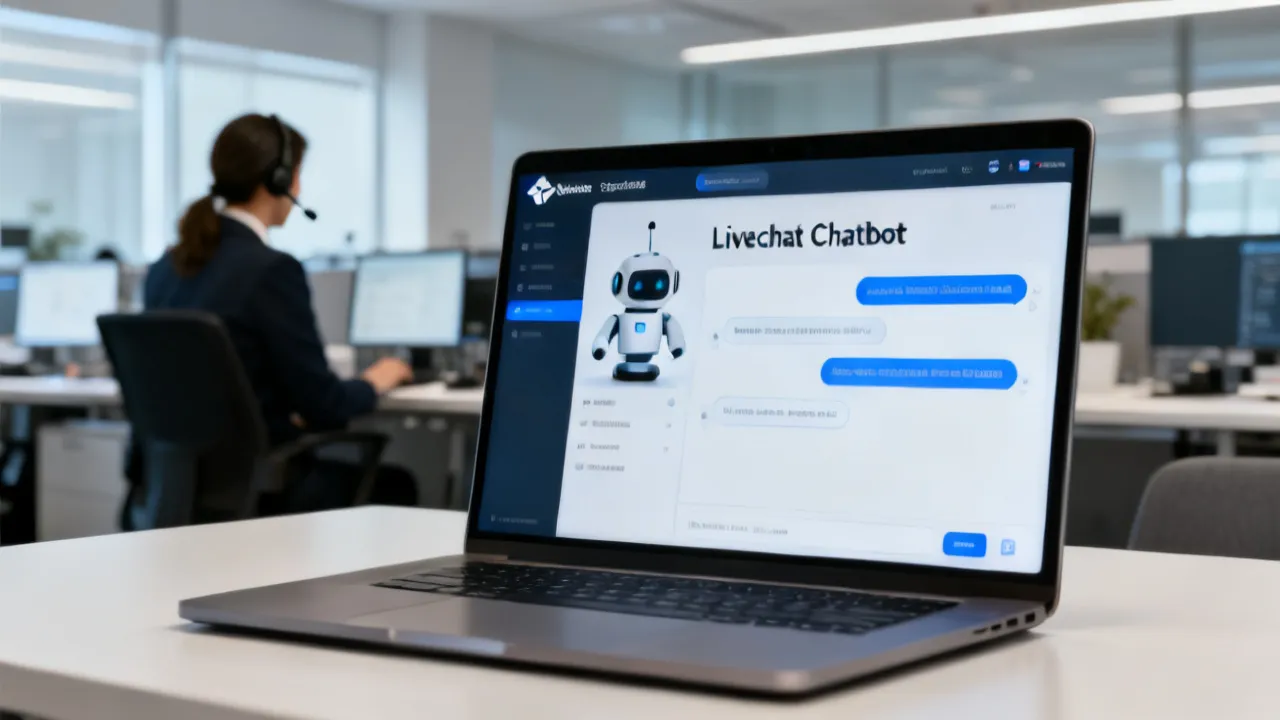
A Livechat Chatbot is a customer-service automation tool that handles common inquiries in real time, triages requests, and guides visitors to the right next step—often before a human agent becomes involved. In practical terms, it can answer routine questions, capture key details, and escalate complex cases to your support team with context. For organizations aiming to strengthen customer experience and operational consistency, a well-designed chatbot becomes a “first-line responder” that stays available during peak traffic and across multiple pages or journeys.
From an industry perspective, the biggest value of a Livechat Chatbot typically isn’t “conversation for its own sake.” It’s the combination of fast resolution of repetitive tasks, better lead/customer qualification, and cleaner handoffs when escalation is required. These outcomes depend less on flashy dialogue and more on solid knowledge design, integration quality, and governance of what the bot is allowed to do.
To understand why this matters, it helps to think about the moments when customers contact support. Often those moments are time-sensitive: a customer needs to know whether their order shipped, whether a subscription changed correctly, what a return will cost, or how to regain access to an account. In those situations, waiting for a reply—or being forced to fill out a form without guidance—can amplify frustration. A chatbot, when implemented well, can reduce uncertainty quickly by answering frequently asked questions in seconds, even at times when human coverage is limited.
At the same time, support leaders typically care about internal outcomes too. A chatbot can reduce agent backlog by deflecting predictable requests, standardize early troubleshooting steps, and collect structured information that makes agent work easier. Instead of starting from scratch, agents can receive an organized summary and the necessary identifiers (order number, account email, device model, or category selection) that the chatbot captured.
However, a chatbot is not automatically beneficial simply because it exists. A poorly governed bot can create extra work: it might mis-route, collect the wrong details, or provide answers that conflict with current policy. It can also damage trust if it repeatedly fails to understand the user. So the value of a Livechat Chatbot is best viewed as a system outcome—built from coverage planning, knowledge accuracy, workflow integration, and ongoing iteration—rather than as a single deployment event.
Very Livechat Chatbot implementations follow a straightforward logic: a visitor initiates a conversation (often by clicking a support widget or messaging prompt), then the bot interprets intent and either resolves the request or collects the right information for transfer.
In mature deployments, the chatbot may:
Where some chat experiences fail is when a chatbot lacks boundaries—answering topics it shouldn’t, giving inconsistent policy explanations, or collecting data without a clear escalation path. Professional setups therefore treat the chatbot as a controlled operational system rather than a purely conversational novelty.
To make this more concrete, imagine a common scenario: a customer lands on an e-commerce product page. They click “Chat,” ask, “When will my order arrive?” A well-designed bot will detect the intent (order status) and proceed along the right path. It might ask for an email or order number, confirm identity, then retrieve shipping status through an integration. If the customer provides enough information, the bot answers with delivery estimates and tracking instructions. If the bot cannot verify identity or the order isn’t found, it doesn’t keep guessing; instead it escalates to a human agent or prompts the customer to use an official self-service portal.
Now consider a more complex scenario: “I was charged twice for my subscription.” This involves billing policy, transaction history, and potentially refund approvals. In a high-performing system, the bot should not attempt to “decide” beyond approved guidance. Instead it can collect the transaction identifiers, clarify the billing period, and then transfer to a billing agent with a structured summary. The bot’s job is to make sure the agent receives the right context so that time is not wasted asking for details the bot already could have captured.
Another important part of “how it works” is the lifecycle of the conversation. Many users do not start with the exact keyword or intent that the bot expects. A customer might write, “I can’t log in and it says the password is wrong,” or “My password reset link never arrives,” or “The code is invalid.” In each case, the bot’s job is to interpret the intent cluster (account access) and then guide the user through the likely next steps. That guidance can be knowledge-based (“Follow these reset steps…”) and/or process-based (“If you didn’t receive an email within 10 minutes, check spam…”). When confidence is low—such as when the user is describing something unusual—the bot should pivot to escalation.
Finally, real customer journeys include interruptions. A user may minimize the window, come back later, ask from a mobile device, or ask a question on a different page. Some chat implementations maintain context across sessions; others restart. A good Livechat Chatbot design accounts for these patterns by storing relevant conversation metadata and ensuring the escalation handoff still includes enough information for an agent to pick up immediately.
When evaluating a Livechat Chatbot, the deciding factors usually fall into four categories: coverage, accuracy, integration, and governance.
Think of these as an interlocking set of requirements. Even a bot with high natural-language capabilities can fail if it doesn’t cover the right intents. Even a bot with broad coverage can frustrate users if it answers incorrectly. Even a bot with correct answers can create operational drag if it doesn’t integrate with the tooling agents use. And even a bot that seems to work technically can become risky if governance doesn’t define boundaries for data collection and policy compliance.
A chatbot’s impact is directly tied to the volume and predictability of the questions it handles. If your customer inquiries concentrate on a few themes—shipping timelines, account access, password resets, return windows, warranty terms—those are ideal automation candidates. Conversely, if inquiries are highly bespoke or context-dependent, the chatbot should focus on triage and data capture rather than attempting full resolution.
Coverage isn’t only about whether the bot can theoretically answer an FAQ. It’s also about whether the bot can reliably identify the user’s intent and route them to the right answer path. For example, “Where is my order?” might show up as many variants: “tracking doesn’t work,” “no updates,” “still processing,” “my delivery date changed,” or “I got an email that my order is delayed.” If those variants aren’t mapped properly to intents, the bot will miss the opportunity to help.
During planning, teams often find it helpful to build an “automation shortlist.” That shortlist is a prioritized list of intents, based on frequency and impact. Some organizations rank by contact volume; others rank by operational cost (how time-consuming certain requests are). A strong approach blends both. For example, a low-frequency but high-cost issue (like complex technical troubleshooting) might be worth automating partially—not to resolve fully, but to collect structured diagnostic details and accelerate the human process.
Coverage should also consider the channels you operate. Live chat on a website may draw customers who are already engaged and ready for immediate answers. A chatbot in a mobile app might face different user expectations and usage patterns. If your bot is deployed in multiple places, ensure your coverage is consistent or intentionally tailored per channel.
Accuracy depends on the quality of the knowledge base and the logic that connects user intent to responses. Industry top practice emphasizes:
To improve accuracy, you need to ensure your knowledge content is written in a way that’s actually usable in conversations. Help articles sometimes assume a reader will browse and scan sections, but a chatbot must deliver information as a guided step sequence. That means content should be structured: prerequisites first, step-by-step instructions, what to expect next, and troubleshooting alternatives if the first step fails.
Another accuracy factor is “tone and compliance.” Even when facts are correct, a chatbot can create risk if it frames policy inaccurately. For example, if a refund window is time-limited, a bot must clearly state the conditions. If a warranty excludes damage due to misuse, the bot should present the exclusion accurately and politely. This is less about the chatbot “understanding language” and more about enforcing what it is allowed to say.
It’s also important to distinguish between different kinds of “accuracy.” There is intent classification accuracy (did the bot choose the right path?), content accuracy (does it provide the correct information for that path?), and execution accuracy (did it ask for the right details, in the right order, and interpret them correctly?). Many teams focus only on content accuracy, but bot performance often depends heavily on intent classification and the quality of follow-up questions.
Fallback behaviors deserve specific attention. A robust bot should have a clear “I’m not sure” pathway that transitions the customer to a human or to an alternative self-service route (like a help center search). The fallback should be designed so it doesn’t feel like abandonment. A good fallback might say: “I can’t confirm that from our automated help. Let’s connect you to an agent,” then immediately capture key details and transfer.
For customer support teams, the very frustrating failure mode is automation that creates extra work. A high-performing Livechat Chatbot should integrate with systems such as ticketing, CRM, order lookup (when permitted), or knowledge management—so the chatbot can hand over actionable context rather than dumping raw chat logs.
Integration has several layers. At a basic level, the chatbot should create tickets automatically when escalation occurs. But high value comes from better ticket enrichment. For example:
Integration also affects user experience in subtle ways. If the bot can check order status, the conversation ends faster. If it can’t, it should not pretend it can; it should guide the user to a status page or request escalation with the right context. In other words, integration isn’t only about internal workflows—it also shapes what the bot can credibly promise to the customer.
Operationally, integration also includes permissions and authentication flows. For privacy reasons, bots should not request or expose more data than required. Integrations should be designed so the bot uses secure authentication, and any data it retrieves is handled according to internal policies.
Professional deployments establish rules for what the bot can do and what it cannot. This includes:
Governance should be treated like system safety. Users interact with the bot under stress—after a charge fails, when delivery is delayed, when an account is inaccessible. If the bot makes promises outside policy or mishandles personal data, the business impact can be significant.
Even when the bot’s responses are text-based, governance includes rules about risk. High-risk topics might include identity verification concerns, refunds and chargebacks, legal disputes, and anything that could be interpreted as legal or financial advice. In those cases, the bot can still help by triaging and collecting information, but the decision-making should remain with humans or with a controlled internal workflow.
Governance also includes quality control procedures. For example, when a refund policy changes, the knowledge content must be updated and validated. A chatbot that continues using outdated content can cause systematic errors. Therefore, organizations often build an operational workflow that connects policy owners to chatbot knowledge update processes.
Finally, governance covers escalation and auditing. If a customer claims the bot gave incorrect information, you should be able to reconstruct what it said and what knowledge it referenced. That means logging, transcript retention policies, and traceable knowledge versioning where possible.
Pricing for a Livechat Chatbot varies widely based on features, deployment approach, and usage. Instead of focusing on a single “price tag,” buyers should evaluate the total cost of ownership, which often includes:
Because you requested price information and supplier details, note the following limitation: your prompt did not provide specific numeric price quotes or named suppliers/locations. To remain objective and avoid inventing details, this article treats pricing as a decision framework rather than a fabricated cost list. If you share your target supplier names, country/region, and expected chat volume, I can help you structure a compliant comparison based on your exact inputs.
To make pricing evaluation more actionable, consider the commercial models you might encounter:
When comparing vendors, buyers often make the mistake of selecting based only on the lowest monthly cost. That can be risky. A cheaper bot may lack key capabilities like robust analytics, audit logging, or integration depth—leading to higher internal labor costs to compensate. Conversely, a more expensive vendor might include better connectors and analytics, which reduces the ongoing burden.
A helpful way to estimate total cost is to break it into three buckets:
Additionally, chatbots can create indirect savings. If you deflect a meaningful portion of repetitive contacts, you may avoid incremental hires or reduce overtime. You might also improve agent productivity by ensuring better handoffs. Those benefits should be quantified using your current support metrics. Even if exact numbers vary, building a conservative forecast can help you compare vendor economics more realistically.
The supplier question is less about brand reputation alone and more about whether the vendor’s capabilities match your requirements. A pragmatic evaluation focuses on deliverables:
To reduce guesswork, you can structure a vendor evaluation process around testable scenarios. Instead of asking, “Can your bot do order status?” ask the vendor to demonstrate the experience end-to-end:
Another part of supplier fit is how the vendor supports ongoing operations. Some platforms may technically work, but they might require heavy manual effort to update knowledge or tune intent mappings. A good vendor helps you maintain quality over time—ideally with workflow tools, content versioning, and analytics that show where the bot fails.
It’s also useful to evaluate the implementation methodology. For example, do they help you map intents from your historical ticket categories? Do they provide templates for fallback and escalation flows? Do they include QA support for multilingual and multi-region setups? Implementation quality often determines long-term performance, not just the raw “AI capability” of the chatbot.
Independent assessments and formal vendor documentation can help—especially for security, privacy, and system behavior. When performance claims are involved, compare metrics carefully and request definitions so you know what is being measured.
Finally, consider contractual terms. If uptime, security responsibilities, and escalation SLAs matter to you, clarify them upfront. If you expect high-volume traffic during campaigns or seasonal peaks, you should verify performance under load and define how the vendor handles spikes.
Localization affects conversational quality and escalation outcomes. Even if your Livechat Chatbot is technically fluent, it must align with local customer expectations—tone of voice, typical phrasing, and support norms. For example, in markets where customers prefer direct answers, the bot should present concise steps quickly. In markets where customers expect formality, the bot should adopt an appropriate register.
Because no specific city or country was provided in the keywords, this article uses a general “nearby” localization principle: your bot should reflect local support patterns used by nearby operations (your local help desk vocabulary, common issue categories, and internal ticket taxonomy).
In practice, localization should be treated as more than translation. A localized bot should match how customers describe problems. Customers may use different terminology for the same issue. For instance, “billing period” might be phrased differently across regions, and “shipping address update” may have distinct workflow names internally. If the bot’s intent mapping expects one phrasing but customers use another, coverage drops and users escalate more often.
Also consider local compliance requirements. Some regions have specific customer communication standards, data privacy laws, or refund rules. Governance must reflect those regional policies. A chatbot that is compliant in one country may not be compliant in another unless content and workflows are adjusted.
For on-site customer experience, pay attention to the chat widget behavior. If the bot appears intrusive or blocks navigation, customers might abandon. Conversely, if the bot is too hidden, customers might not use it. A well-designed Livechat Chatbot experience appears at the right times—such as when customers land on support-heavy pages (order tracking, returns) or when they spend time trying to find answers.
Localization also includes time formats, currency formats, and date conventions. If a customer sees “MM/DD/YYYY” formatting but expects “DD/MM/YYYY,” confusion can increase. If the bot reports delivery estimates, make sure it uses local time zones and language conventions.
Lastly, consider cultural expectations around customer service. Some customers expect empathy and apologies; others prefer straightforward instructions. A bot can still be helpful without adopting a tone that feels unnatural. Align the bot’s voice with your brand guidelines and with what your agents typically do during escalations.
Below is a supplemental guide that compares practical approaches for deploying a Livechat Chatbot. This is intended to help decision-makers align expectations with implementation reality. (Note: per your instructions, the table contains no links.)
| Deployment Approach | Top Fit Scenario | What to Validate | Typical Requirements |
|---|---|---|---|
| Rule-based intent routing | Highly repetitive questions with clear categories | Coverage quality, routing accuracy, fallback behavior | Curated FAQs, consistent ticket taxonomy, escalation rules |
| Knowledge-base grounded responses | Organizations with strong help center content | Content freshness, answer citations/traceability (where applicable) | Version control for knowledge articles, governance workflow |
| Hybrid (knowledge + conversational logic) | Mixed inquiries (simple to mid-complexity) plus triage | Intent confidence handling, handoff summaries, agent usability | Integration with CRM/ticketing, data capture rules |
| Human-in-the-loop escalation first | High-stakes or compliance-heavy environments | When escalation triggers, audit trail, controlled response scope | Compliance review process, restricted automation boundaries |
To interpret the table, it helps to see these approaches as different levels of autonomy. Rule-based routing often provides predictable behavior but may struggle with natural language variability. Knowledge-based grounding improves factual alignment with content, but the content must be accurate and maintained. Hybrid approaches add conversational flexibility while still relying on structured content and workflows. Human-in-the-loop escalation-first architectures prioritize safety and control, often leading to higher human involvement but lower risk for regulated industries.
It’s also possible to combine approaches over time. Many organizations launch with a hybrid or knowledge-based bot limited to top intents, then gradually expand coverage as confidence and governance maturity improve. This staged approach reduces risk and gives you time to improve knowledge content and escalation workflows.
To expand these steps into something a team can execute, here is how each phase typically looks in real projects.
Step 1: Inventory top contact drivers. Start with historical support logs, ticket categories, call reasons (if available), and chat transcripts. The goal is not only to identify frequent topics but also to identify the “user problem statement” behind those topics. For example, “Password reset issues” might include multiple underlying causes: blocked emails, expired links, incorrect email entry, or confusion about login methods (SSO vs password). If you can separate those sub-causes, you can create more accurate automation paths.
Step 2: Define automation boundaries. This is where governance becomes operational. You might set rules such as: the bot may provide policy explanations for returns and warranty, but must escalate on chargebacks, disputes, or cases involving regulated communication. You might also set rules for data collection, like only asking for order number after the user selects an order-status intent, and only asking for a full address in scenarios where it’s necessary for a change request and safe to collect.
Step 3: Prepare knowledge content. Translate your existing help articles into conversational-ready formats. This may include creating “micro-answers” for chat: short explanations, step-by-step instructions, and clear troubleshooting branches. Also build “decision trees” that the bot can follow: if delivery is delayed beyond X days, provide Y steps; if the user receives an error code, direct them to the correct fix.
Step 4: Design conversation flows. Chat flows should be short and minimize friction. A good principle is to ask questions in the smallest order needed to resolve the request. If you need an order number to check status, ask for it early. If you need the user’s plan type to provide correct billing information, ask for plan selection first. Avoid collecting extraneous details that the bot will never use. Every extra question increases drop-off and creates a perception that the bot is not helpful.
Step 5: Implement routing and ticket handoff. When escalation occurs, make sure agents receive structured information. A strong handoff summary might include: intent, customer-selected category, key user-provided answers, relevant timestamps, any troubleshooting steps attempted, and the confidence level or fallback reason (as internal diagnostics). The purpose is to allow an agent to resolve without re-asking the same questions.
Step 6: Set up analytics and QA. Analytics should answer questions like: Which intents drive the most escalations? Which answers result in follow-up questions? Where do users abandon the chat? How often does the bot fallback? These analytics should be linked to specific knowledge articles and conversation flows so improvements are actionable.
Step 7: Run controlled rollout. Use limited scope deployments. Start with a subset of intents and perhaps specific site pages. Run A/B tests on chat widget timing and language if you have the capability. Evaluate results before expanding. Controlled rollout also gives you time to fix knowledge issues that you may not have discovered during initial testing.
Step 8: Institute a content update cycle. Create a process that connects policy owners, content management, and chatbot knowledge updates. If your help center uses version control, integrate with it. Ensure that changes in policy trigger review of relevant bot scripts. It’s not enough to update articles; you must also ensure the bot uses the latest versions and that governance is consistent.
Beyond these items, planning early also includes operational readiness. Many projects underestimate the effort required for “continuous improvement.” That effort might involve reviewing misclassified intents, updating knowledge, improving conversation flows, and retraining or adjusting models if applicable. If no one owns this process, performance can degrade after launch—especially as policies change or customer behavior shifts.
Monitoring responsibilities should be formalized. Who watches the dashboards? Who reviews escalations? Who approves policy updates? Who responds to incidents (like a knowledge article mistakenly showing outdated information)? Even a small team needs defined responsibilities so the chatbot doesn’t become “nobody’s project.”
Escalation criteria should be refined over time. Initial thresholds can be too conservative (causing unnecessary escalations) or too aggressive (allowing incorrect answers). A good approach uses observed outcomes. For example, measure how often the bot’s answers are followed by user dissatisfaction or by escalations soon after. Adjust triggers based on this evidence.
Data protection practices should include more than storage policies. Consider how data is transmitted, who has access, and whether the chatbot needs to mask sensitive input. For example, if the bot requests an order number, it might store it for the duration of the session and include it in a ticket summary, but it shouldn’t store it in a way that violates retention policies. Define retention duration and access controls up front.
Brand and tone guidelines can be tested. Some organizations create a small style guide: do we say “I can help” vs “I’m here to assist”? Do we apologize when we fail, and if so, how? Should the bot use contractions (“you’re”) or formal language? Do we use bullet lists or short paragraphs? If you don’t define these, the bot’s voice might drift over time.
Because you asked for reliable sourcing when discussing performance, it’s useful to ground expectations in general industry findings rather than inventing specific numbers. For example, research and industry analyses consistently note that customer service automation can improve responsiveness and consistency when paired with robust knowledge content and effective handoff procedures.
One widely cited body of work comes from Gartner and McKinsey regarding automation, customer experience, and service efficiency. Additionally, Salesforce and Zendesk publish customer service benchmarks that help teams contextualize outcomes such as self-service usage and contact deflection—though exact percentages vary by industry and methodology. When you evaluate your own outcomes, treat vendor and industry metrics as directional until validated against your workflows.
Sources you can consult for context (without using any links here): Gartner research on customer service automation; McKinsey insights on automation and productivity; Salesforce service reports; Zendesk customer service benchmark publications.
It’s useful to interpret these sources in a practical way. They often converge on a few recurring themes:
In other words, “reliable sources” generally support the idea that chatbot success is a process and governance outcome. The technology is important, but it rarely compensates for weak workflows.
When you plan evaluation, avoid relying only on vendor claims. Instead, set your own measurement plan. Define baseline metrics for your current support performance (time-to-first-response, backlog size, resolution time, customer satisfaction). Then compare after the chatbot launch for the same categories. This provides a realistic view of automation’s impact.
A Livechat Chatbot typically refers to a chatbot experience presented through a live chat interface embedded in your website or customer portal. The key difference is usually not the “brain” alone, but the deployment context: integration with chat widget behavior, routing to agents, and continuity with existing support operations. A generic chatbot can be used in many channels, but a Livechat Chatbot is often optimized for support conversations that feed directly into ticketing or agent workflows.
Many organizations use chatbots to handle repetitive inquiries and triage requests, which can reduce repetitive workload. However, the practical goal is more often to reallocate human effort toward complex cases rather than eliminate human support. Effective handoffs and high-quality escalation logic determine whether customers actually experience better service rather than frustration.
You prevent this by restricting the bot to approved sources and maintaining those sources via a clear update workflow. Additionally, implement fallback behavior when confidence is low and route higher-risk topics to human agents. From an operational standpoint, “accuracy” is as much a process issue (content governance) as it is a model or script issue.
Generally, the top-fit questions are those with structured answers or step sequences: order status checks, return policy basics, account access steps, password reset instructions, appointment booking guidance, troubleshooting for common device setups, and product eligibility questions. The chatbot can also collect details and prepare a ticket for agent follow-up when issues are more complex.
Common metrics include resolution rate for automated conversations, escalation rate, time-to-first-response, fallback frequency, and category-level performance (e.g., how well the bot handles billing questions vs. technical questions). It’s also useful to measure agent time saved via ticket summaries and review qualitative feedback from both customers and support teams.
Not always for basic FAQ automation, but integrations become critical when your goal is operational efficiency: creating or updating tickets, attaching conversation summaries, and ensuring agents receive context. If integration is missing, your chatbot may resolve questions but still generate manual effort during handoff.
Timelines vary based on scope: a limited “top intents” rollout can be faster than a full omnichannel implementation. A professional deployment also includes knowledge preparation, governance setup, and testing. Plan for an iterative approach rather than a one-time launch.
Internally, you typically need ownership for knowledge content, a clear escalation path to human teams, agreement on data handling and privacy requirements, and time for QA review during rollout. The chatbot will reflect your operational reality—so internal readiness matters as much as vendor capabilities.
Yes, many systems support multilingual experiences, but quality depends on whether you have localized knowledge content and properly designed intent mapping for each language. Without localized content, translations can sound natural while still missing domain-specific accuracy.
Common failure modes include insufficient knowledge coverage, unclear escalation triggers, inconsistent policy content, poor ticket handoffs, overly long conversational flows, and lack of monitoring. Another frequent issue is designing the bot around what the organization wants to automate rather than what customers actually ask.
From an operational standpoint, a Livechat Chatbot succeeds when it functions like a disciplined support specialist: it knows what to answer quickly, asks only what it must, and escalates at the right moment with enough context to prevent delays. To achieve this, prioritize:
It’s also wise to align chatbot behavior with your brand’s customer service philosophy. Customers perceive tone, clarity, and willingness to help. When the bot avoids overpromising and escalates responsibly, trust tends to increase—even when automation is not “perfect.”
One “expert-level” recommendation is to design for the most common reasons customers get stuck. For example, if customers frequently abandon after the bot asks too many questions, reduce those questions. If customers frequently escalate when the bot fails to identify orders, improve the identification flow (ask for the minimum needed identifier early, provide clear formatting instructions, validate input). This is often more impactful than adding new intents.
Another recommendation is to treat chatbot deployments like a product, not a project. That means there should be a roadmap: what will be automated next, what knowledge content will be created or improved, what integrations will be added, and what quality thresholds will be maintained. A roadmap also helps manage stakeholder expectations and internal resourcing.
Finally, ensure cross-functional alignment. Customer support, product, legal/compliance, and operations all influence chatbot behavior. Support wants speed and helpfulness; product may want fewer tickets; compliance needs safe boundaries; operations needs consistent workflows. A chatbot that reflects the business accurately will require input from each of these groups, especially for policy and risk topics.
A Livechat Chatbot can be a meaningful support asset when designed with clear boundaries, accurate knowledge grounding, and reliable escalation. Rather than focusing solely on technology, successful deployments emphasize governance, integration, and iterative improvement. If you provide your expected chat volume, key issue categories, and any supplier preferences, you can use this guide as a blueprint to assess fit, define requirements, and plan a rollout that improves customer experience without creating operational friction.
When implemented thoughtfully, the chatbot becomes more than an automation tool. It becomes a consistent part of your customer service system—handling simple questions instantly, guiding customers through troubleshooting steps, and handing off complex situations in a way that respects both time and accuracy. The best outcomes happen when the bot is continuously refined using real conversation data, supported by well-maintained knowledge content, and operated within governance rules that protect customers and the business.
Striking the Perfect Balance: Navigating Premiums and Out-of-Pocket Expenses in Senior Insurance Plans

Explore the Tranquil Bliss of Idyllic Rural Retreats

How to Make Lasting Memories at Disneyland Attractions

Affordable Phones and Plans for Seniors

Affordable Full Mouth Dental Implants Near You

Unlock the Top Kept Secrets to Finding Your Ideal Dentist for Flawless Dental Implant Results!

Discovering Springdale Estates

The Guide to Car Trading

Affordable Cell Phones Without Plans


Understanding Rlock Advpl in Business
Rlock Advpl represents a pivotal advancement in business software solutions, offering enhanced security and efficiency for enterprise resource planning systems. This article delves into the intricacies of Rlock Advpl, its application in modern businesses, and the benefits it offers in streamlining operations and safeguarding data. As an expert tool, Rlock Advpl is essential for businesses looking to optimize their IT infrastructure.

Unveiling Atranet Innovation
Atranet represents a cutting-edge concept in networking technology. Harnessing its capabilities can transform digital communication by providing seamless connectivity. Designed to optimize data transfer, security, and efficiency, Atranet is shaping the future of how we connect and share information. This article delves into its structure, applications, and potential impacts on industry practices and consumer experiences.

Understanding Polysulfide Adhesive Applications
This comprehensive guide explores the applications and benefits of polysulfide adhesive, highlighting its unique properties and widespread use in construction, aerospace, and automotive industries. Known for its flexibility and resistance to various environmental factors, polysulfide adhesive is a key component in sealing and bonding applications, providing durability and reliability in demanding conditions.
Comparing Vtex with Salesforce Commerce
This article provides an in-depth comparison between Vtex and Salesforce Commerce, two leading digital commerce platforms. Each offers unique features suited to different business needs. Vtex is renowned for its collaborative commerce approach, while Salesforce Commerce shines with its comprehensive customer relationship management capabilities. Explore their differences, strengths, and insights from industry experts.

Understanding the Latest Chrome Version
This article delves into the intricacies and features of the latest Chrome version. Chrome, developed by Google, is one of the very popular web browsers globally, known for its speed, simplicity, and security features. Each update aims to enhance user experience through improved functionality and performance. Understanding these updates is crucial for both everyday users and developers.

Maximizing Benefits of Solar Panels: Costs and Energy Efficiency
Solar panels can save money and energy. Discover how to optimize installation for maximum benefits.