This guide explains how to evaluate K suppliers and pricing with an industry-first, risk-aware approach. It reviews background concepts around supplier selection, cost drivers, and documentation quality, then provides a structured comparison framework. The article also covers conditions for quotes, quality checks, and decision steps designed for consistent procurement outcomes.
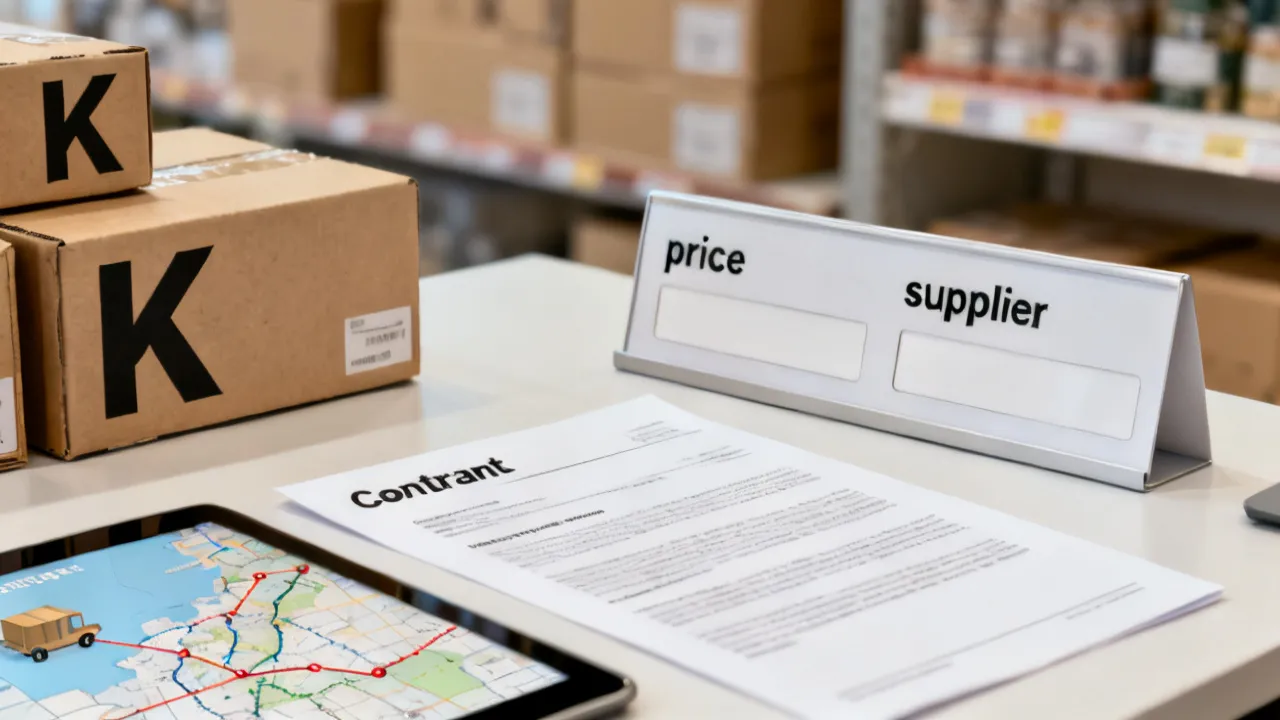
When you’re evaluating K suppliers and pricing, start by making your requirements concrete—specifications, delivery expectations, acceptance criteria, and the documentation you will require. Pricing becomes meaningful only after you confirm what is included (materials, lead times, warranty terms, testing, packaging, and after-sales support) and how the supplier demonstrates compliance. In practice, the top procurement decisions combine clear scope control with verifiable supplier capabilities, rather than focusing on a single quoted number.
Because suppliers’ cost structures can differ widely, “price” should be treated as an output of structured assumptions. A quote that looks lower can increase total cost later if it omits testing, uses non-equivalent components, or extends delivery in ways that affect your downstream operations. To evaluate K suppliers effectively, you should assess both (1) commercial conditions and (2) execution risk—then align your purchasing process accordingly.
Procurement teams often underestimate how much “value” is hidden in the fine print: whether the quote includes compliance paperwork, which testing standard is used, how rework is handled, what buffer time is assumed, and what “delivery” actually means (factory gate shipment, port loading, warehouse receipt, or installation complete). When you clarify these elements up front, you convert procurement from a negotiation game into an evidence-based comparison.
To keep the evaluation coherent, you should also ensure alignment among stakeholders—operations, quality, engineering, supply chain, finance, and end users—so that the “K” requirements are interpreted consistently and the acceptance criteria are agreed. Without internal alignment, even the best supplier evaluation model can fail because “K” gets applied differently by different teams, leading to confusion over what is being purchased.
The keyword set includes K alongside “price” and “supplier,” but it doesn’t specify what “K” stands for. In many business settings, “K” may be an internal classification code, a product family label, a specification identifier, a drawing revision marker, a procurement category tag, a compliance regime, or even a version group that bundles multiple components. For objective decision-making, you should treat K as a reference category requiring an accompanying definition in your documents (e.g., drawings, BOMs, technical sheets, material grades, or quality standards). Only then can you compare suppliers on like-for-like terms.
From an industry-expert standpoint, ambiguity around category codes is a frequent root cause of mismatched quotations. If you clarify what “K” means at the start, you reduce rework, shorten evaluation cycles, and improve auditability. Auditors and internal compliance teams typically want a traceable link between what was specified and what was supplied—if “K” is unclear, the procurement record becomes vulnerable.
To make “K” definition operational, consider building a “K specification pack.” This pack usually includes: a master specification document, any relevant drawings, applicable standards (industry and regulatory), allowable substitutes, testing requirements, packaging and labeling requirements, traceability requirements, and any special acceptance criteria (for example, visual inspection tolerances, dimensional sampling plans, or batch traceability rules). You can maintain this as a controlled document set and require suppliers to acknowledge it.
Also consider whether “K” includes multiple variants. For instance, “K” might represent a product category that has sub-variants by size, material grade, performance class, or compliance standard (e.g., different heat treatment requirements). If you do not disaggregate those variants in your quote request, you risk receiving quotes that are not truly comparable.
Finally, if “K” is an internal code that corresponds to different customer end-use requirements, clarify those requirements explicitly. Sometimes procurement buys “K” based on procurement classification, while engineering expects “K” to meet higher performance needs. That gap often surfaces as quality claims, schedule disruptions, and escalations—costly outcomes that stem from failing to define “K” in practical terms.
Supplier selection is not merely a vendor-choice exercise; it is a control mechanism for quality, delivery consistency, and compliance. An expert procurement approach typically evaluates four pillars:
If any pillar is weak, a low price may not translate to good value. Industry research on supplier management consistently highlights that variability and quality failures tend to be cost multipliers, even when the initial unit cost looks attractive. (For authoritative grounding, see sourcing and supplier-risk guidance from bodies like the Institute for Supply Management (ISM) and ISO quality management documentation.)
It’s also helpful to think of procurement decisions in terms of total risk-adjusted cost. Even if you only care about “price,” you should account for the probability that a supplier will fail on quality, miss delivery windows, or provide insufficient documentation. A small difference in unit price can be overwhelmed by the expected cost of disruptions. Those disruption costs are often “hidden” (such as expediting, overtime, scrap, missed production windows, penalties, warranty obligations, or administrative workload), but they can be modeled if you have historical performance data.
In mature organizations, supplier performance management is continuous rather than a one-time event. That means you might evaluate a supplier at onboarding using evidence and sampling, but you keep tracking delivery performance, defect rates, responsiveness, and compliance evidence through the supplier lifecycle. When you treat evaluation as continuous, you can renegotiate pricing based on performance and adjust future sourcing strategies with data.
To make measurable requirements truly actionable, the acceptance criteria should be explicit and unambiguous. For example, instead of “meets spec,” state the dimensional tolerance, surface finish definition, test standard, and sampling method. Instead of “certificates included,” specify which certificates (e.g., CoC, CoA, batch certificates), the format (PDF, hard copy), the timing (with shipment, within 24 hours), and what constitutes acceptable documentation.
Finally, tie supplier evaluation to your internal constraints. If you have limited storage capacity, packaging and labeling requirements become more than a compliance checkbox—they become operational necessities. If your production line is sensitive to lead-time variability, execution reliability must be more heavily weighted than in environments where inventories buffer uncertainty.
Pricing comparisons should consider what is actually included. In very procurement categories, “price” is affected by:
Industry practice often uses “total landed cost” logic—freight, duties (if applicable), and handling—plus downstream costs (inspection, rework, downtime) to determine the true cost of ownership. You can apply the same principle to K procurement: ask for cost breakdowns and assumptions to prevent “hidden scope” from inflating your real spend.
But “total value” is broader than “total landed cost.” It includes how your operations will behave after receipt. If one supplier offers a lower unit price but your QA team must spend more time verifying incoming batches because documentation is incomplete, that verification effort is a direct cost. If a supplier’s packaging leads to more damage during transit, you incur scrap and re-inspection. If a supplier’s documentation is delayed, you might need additional administrative work or experience production line hold-ups waiting for paperwork.
Consider also the effect of “lifecycle costs.” Some products may have a higher defect rate that increases warranty returns or field failure risk. In those contexts, a supplier that looks cheaper on the surface can be more expensive across the entire lifecycle.
To evaluate “price” as an output, you can request a standardized quotation format. For example, ask suppliers to break pricing into: unit manufacturing cost, documentation/testing cost, packaging cost, freight/incoterms, lead-time-related costs (e.g., expedite charges), warranty/service costs, and any non-recurring engineering or tooling costs if applicable. While suppliers may resist granular breakdowns, many will provide a reasonable level of detail if you explain that it’s needed for internal compliance, cost modeling, and fair comparison.
When you receive quotes, normalize them to a consistent basis. If one quote includes testing certificates and another doesn’t, you can adjust the second quote by estimating the cost of testing you would need to perform in-house to meet your acceptance criteria. That adjustment is especially important when compliance is mandatory and you cannot accept missing documentation.
Many supplier responses sound similar, so your evaluation should rely on evidence. Ask for documents that demonstrate capability and process control. Typical evidence types include:
When you evaluate K suppliers, require answers that allow verification. If a supplier cannot provide traceability or test evidence, you should treat that as a risk factor—not an acceptable variance.
Evidence can be categorized into three levels of confidence:
Supplier marketing usually provides baseline documents. However, for procurement decisions, output and performance evidence are often more relevant. For “K” categories where failure is costly, require sample batch reports, not just general certificates. If suppliers claim they can meet tight tolerances, request evidence that they have achieved those tolerances historically.
Also, validate evidence integrity. For example, check whether the certificates correspond to the correct part number, revision, and batch/lot. Confirm whether standards cited on documents are the same standards specified in your “K” pack. If the supplier provides “equivalent” documents, request an equivalency explanation and verify that equivalency is acceptable under your internal compliance requirements.
Finally, include evidence for documentation and packaging quality, not just product quality. Many procurement disputes involve mismatch in packaging materials, labeling, or shipment documentation (e.g., missing packing lists, incorrect part labeling, incomplete shipping paperwork). These issues may not be “product defects,” but they affect the flow of goods and compliance with your receiving processes.
To compare suppliers objectively, review each quote using a consistent structure. If you’re dealing with multiple categories under K, keep the comparison scoped to identical item definitions.
This approach aligns with common procurement governance practices found in major supply chain frameworks and audit-oriented quality systems.
To make the checklist even more robust, consider adding two additional lines of review: (1) the supplier’s “quote validity period” (so you know prices won’t change unexpectedly), and (2) the supplier’s “conditions for price adjustments” (such as commodity index fluctuations, labor cost pass-through, or exchange rate adjustments). If your buying strategy depends on stable cost, you should ensure the contract defines how those adjustments occur and how you will be notified.
Also ensure that all quotes respond to the same order assumptions. For example, do they assume certain order quantities, packaging sizes, or delivery windows? A supplier might quote a unit price that assumes a certain order quantity tier; if your actual demand differs, the quote might not remain valid or might require tier recalculation.
If you require certain inspection methods (for instance, you might want a sample inspection at receiving), specify whether the supplier will provide test results or whether you will conduct receiving QC. Some suppliers will include basic test reports but expect you to do further verification—others will bundle more comprehensive testing. Those differences can materially affect total cost and acceptance risk.
| Evaluation lens | Common source of evidence | Step-by-step method | Conditions / requirements |
|---|---|---|---|
| Specification alignment for “K” | Technical drawings, BOM, spec sheets | Match each quote line item to “K” specs; verify versions; request clarification if equivalency is proposed | Quotes must reference the same revision; substitutions require written approval |
| Quality management | Quality certifications, inspection plans | Review certificates; validate inspection points; request sample inspection reports where applicable | Supplier must provide traceability or equivalent documentation for each batch/lot |
| Pricing transparency | Itemized quote, cost breakdown assumptions | Compare like-for-like inclusions; normalize terms (incoterms, packaging); compute total value basis | Quotes must state what testing/documentation is included vs. add-on |
| Delivery reliability | Lead-time history, capacity notes | Assess promised lead times; request capacity rationale for “peak” periods; evaluate buffer assumptions | Supplier must disclose constraints and triggers that change lead time |
| Issue resolution and warranty | Warranty terms, nonconformance procedure | Review claim process; verify replacement timelines; confirm how defects are contained and documented | Warranty should specify responsibilities, procedures, and documentation for claims |
For more precision, you can expand the table to include additional “K” evaluation lenses depending on your domain:
The reason to expand the lens list is that procurement outcomes often depend on factors beyond product specs. Documentation, compliance evidence, packaging, and warranty claim logistics can be as critical as the physical product itself.
In mature organizations, supplier evaluation is integrated into a broader procurement governance process. Instead of treating “price” as the primary decision lever, they use structured scoring and evidence-based gating. The benefit is twofold: reduced quality risk and better predictability in delivery.
While this guide focuses on K suppliers and pricing, the same principles apply across categories—especially where quality, compliance, or operational continuity matters. Industry-wide procurement literature repeatedly emphasizes that supplier risk management improves resilience, particularly when supply chains face volatility. For foundational guidance, consult recognized frameworks such as ISO quality management standards and widely used supply chain risk resources from established institutes.
Procurement maturity typically evolves through stages. Early-stage procurement often prioritizes vendor discovery and quick quotes. Mid-stage procurement starts building standardized RFQs, acceptance criteria, and template-based quote comparisons. Advanced procurement adds deeper evidence requirements, supplier audits, performance-based contracting, and proactive risk planning for lead time variability and quality risk.
As organizations mature, they also build internal capabilities to interpret supplier quotes correctly. For example, procurement might coordinate with quality to ensure that certificate types match internal QA procedures. Finance might coordinate with procurement to standardize total cost calculations, including add-on charges and expected downstream costs. Engineering might coordinate with procurement to ensure that “K” equivalence rules are correctly applied.
This matters because “K” categories can be complex. A procurement team that lacks technical interpretation might accept supplier equivalency claims too easily. A quality team that lacks procurement context might demand certifications that are unnecessary for your acceptance plan, increasing cost and slowing cycle times. Mature procurement aligns these perspectives so that evaluation criteria produce the right trade-offs.
Another maturity factor is how organizations handle uncertainty. Mature organizations do not assume that lead times and defect rates are static; they plan buffers and define triggers for escalating to alternate suppliers. That means when a supplier’s lead-time performance deteriorates, you have a contractual basis and internal workflow to respond quickly.
Below is a practical workflow an operations-focused procurement team could use to evaluate K suppliers and compare “price” responsibly.
Make sure the internal documentation defining K is accurate and version-controlled. If “K” is an internal code, attach the external-facing specification (drawings, tolerances, compliance standards, or category definition). Without this, suppliers may quote different interpretations.
In practical terms, “lock scope” means you should freeze the item definition until your quote window closes and procurement decisions are made. If you must change scope mid-stream, you should issue an updated RFQ/RFQ addendum and rebase the quote comparison. Otherwise, you end up comparing quotes created under different item definitions, which undermines fairness and auditability.
To reduce misunderstandings, you can include “non-negotiables” and “allowed flex.” For example, dimensional tolerances and material grades might be non-negotiable, while packaging style might allow flex within certain constraints. Suppliers can then price the permitted flex appropriately without risking compliance failures.
Also define acceptance criteria and sampling strategy. If you receive in lots and perform sampling, define the sampling plan and acceptance thresholds. If you rely on 100% inspection for certain high-risk dimensions, specify that so suppliers can factor the correct documentation/test strategy into the quote.
Request itemized quotes with the same packaging and documentation expectations. Require that each quotation states lead-time components (production vs. shipping), and specify whether testing certificates are included.
To ensure consistency, you can use a standardized RFQ template. Include: part number / “K” identifier, description, quantity, delivery location, desired delivery window, packaging requirements, documentation list, testing requirements, and contract terms (warranty, returns, payment terms). Provide a clear list of required documents (e.g., certificate types, format and timing) so suppliers cannot omit them and claim the omissions were optional.
Consider also requesting “clarification questions” from suppliers. When suppliers ask questions, it reveals ambiguous scope. You can resolve ambiguity early, reducing the risk of receiving quotes that look similar but are based on different assumptions.
If your suppliers are international, define incoterms clearly and state responsibility for freight, insurance, customs documentation, and any duties/taxes. Quote comparisons often become misleading when one supplier assumes an incoterm that shifts cost to the buyer.
Compare like for like. Convert to a consistent basis that includes documentation deliverables and agreed acceptance criteria. If incoterms or shipping methods differ, adjust the comparison to avoid misleading conclusions.
Normalization can include several common adjustments:
Normalization is not about adjusting quotes to make a preferred supplier look better; it’s about ensuring the evaluation is based on identical assumptions. When you normalize consistently, procurement stakeholders can trust the decision and reduce disputes later.
Score suppliers based on specification alignment, quality evidence, delivery reliability indicators, and dispute resolution/warranty clarity. Don’t use subjective impressions as a substitute for documented capability.
A practical scoring model can assign weights to each evaluation pillar. For example, if quality failures are extremely costly, quality evidence might receive a higher weight than price. If delivery disruptions directly halt production, delivery reliability might be weighted heavily. If compliance documentation is strictly required, documentation completeness could be a gating criterion.
Also include a qualitative-to-quantitative bridge. For example, if a supplier has an established quality management system, you can translate that into a score based on evidence quality (certifications, audit recency, evidence of traceability). Similarly, delivery reliability can be scored based on historical on-time delivery and variability, not just promised lead times.
Risk scoring should also identify “red flags” that trigger rejection or escalation. Examples include: inability to provide traceability, repeated evidence of incomplete documentation, inconsistent item definitions, refusal to commit to acceptance criteria, unclear warranty claim process, or reliance on substitutions without written change control.
When using risk scoring, ensure governance: the scoring methodology should be documented and applied consistently. A procurement decision becomes hard to defend when scoring is ad hoc or when weights change without justification.
For categories with meaningful variability, a sample-based validation or pilot batch can be decisive. Define acceptance thresholds in advance and ensure the supplier understands that evaluation will be measured against them.
Pilot runs are especially useful for “K” categories where the supplier may interpret requirements differently, where tolerances may vary, or where documentation quality is uncertain. A pilot run can test not only the physical quality, but also the documentation process, packaging effectiveness, and traceability accuracy.
When designing a pilot, define:
Also ensure you have a clear decision rule. For example: if defect rate exceeds threshold X, you do not proceed to production; if documentation delivery is missing or incorrect, you may require a remediation plan before proceeding. Decision rules prevent uncertainty and reduce negotiation friction.
Select the supplier that top meets requirements on value, not just price. Ensure contract terms reflect the evaluation assumptions: documentation obligations, lead-time triggers, what happens on nonconformities.
After selection, contract clarity is where procurement protects the organization from “quote drift.” “Quote drift” is when the supplier later performs differently than the quote assumptions—such as providing fewer certificates, using different components, altering packaging, or meeting lead times only under favorable conditions. A well-structured contract reduces these risks.
Your contract should define:
If you require a staged approach (for example, use supplier A for a pilot and supplier B for production), your contract should include transition conditions and performance milestones. This keeps decision-making evidence-based rather than purely contractual promises.
For high-risk categories, consider including service level agreements (SLAs) that define consequences if delivery misses occur beyond tolerance, as well as metrics for quality performance.
These pitfalls often occur simultaneously. For instance, a supplier might quote a lower price by using a different component grade (spec mismatch), while also omitting specific test documentation (documentation mismatch). Another supplier might provide equivalent product but require longer lead times or impose additional fees for certificates (commercial mismatch). When these issues compound, procurement can end up paying more while also taking on quality and schedule risk.
Another common pitfall is “anchoring” on a single quote. Procurement teams might fixate on the lowest unit price and treat other quotes as outliers, even if those quotes include more documentation or better warranty terms. Anchoring reduces objectivity and undermines risk-based decision-making. A consistent normalization and evidence review process prevents this.
Additionally, some organizations compare quotes without accounting for differences in ordering assumptions. For example, one supplier may price based on MOQ tiers, while another may assume smaller order quantities. If your actual order pattern differs, the quotes become incomparable. Make sure your quote request includes the quantities and order cadence you realistically expect.
Finally, a subtle pitfall is failing to check revision level alignment. A supplier may quote “K” but implement a different revision of drawings or spec changes, especially if “K” is an internal code that does not uniquely specify revision. Always require suppliers to reference the relevant revision and to confirm that the quoted items are produced against the correct version-controlled documents.
In this context, K functions as a category reference that must be defined by your specifications (e.g., drawings, tolerances, product family codes, or internal procurement classification). To compare suppliers fairly, you should treat K as incomplete information until the associated requirements are documented.
Compare “price” only after normalizing the quote scope: identical “K” specifications, identical inclusions (testing, certificates, packaging), and consistent delivery terms. Then evaluate total value using acceptance criteria, lead-time reliability, and warranty or service coverage—not unit cost alone.
In practice, you may compute a normalized “effective unit cost” by adjusting for differences in documentation deliverables, inspection burden, and logistics terms. The exact formula depends on your internal costing approach, but the principle stays the same: “price” must be interpreted through the assumptions embedded in the quote.
Request evidence aligned with your risk profile: technical spec compliance, quality certifications relevant to the category, traceability documentation, inspection or test plans, and clear warranty/nonconformance procedures. If the supplier claims capability, ask for documentation that can be verified.
It can also be helpful to request a “documentation package example” from the supplier. For example, ask them to provide a sample set of certificates for a past batch of the same item family (with sensitive information redacted if needed). This lets you verify that the documents meet your format expectations and that the certificate content aligns with the correct batch/lot.
Generally, no. The lowest unit “price” can be misleading if it reflects fewer inclusions, higher expected defect rates, longer lead times, or limited documentation. Instead, select the supplier that provides the top combination of requirement fit, verifiable quality controls, and predictable delivery.
One practical approach is to treat price as a factor in a broader scoring model, rather than as the sole decision. That model might include quality evidence, delivery reliability, warranty strength, responsiveness, and documentation completeness. Even if you ultimately choose the lowest price among the top-ranked suppliers, you reduce the risk that a low quote is low because it omits necessary scope.
Your contract should reflect the evaluation assumptions: deliverables and documentation requirements, acceptance criteria, lead-time definitions and triggers, corrective action obligations, and warranty/return procedures. Ensure change control rules exist for substitutions or specification updates.
Be explicit about remedies. For example: if the supplier fails to deliver complete documentation on time, specify whether payment is withheld, whether penalties apply, or whether the supplier must provide documentation replacement at no cost. Clear remedies deter underperformance and provide operational clarity during disputes.
Use a staged approach when appropriate: start with clear scope and evidence checks, then validate with samples or a pilot order. Define acceptance criteria and documentation requirements up front, and include remedies if results fall short of expectations.
Additionally, define escalation steps. For instance, if quality issues exceed threshold during the pilot, require containment actions and a corrective action plan within a specified timeline. If delivery performance is poor, define whether you can shift volumes or terminate the agreement for convenience or for cause.
Yes. For standardized perspectives on quality and supplier management, consult recognized standards and guidance from organizations such as ISO quality management frameworks and procurement-oriented institutes like ISM. For supply chain risk concepts, reputable research organizations and industry reports provide useful baselines—always verify the applicability to your sector and region.
Beyond general guidance, many organizations rely on internal playbooks built from their own historical performance. If you maintain data on defect rates, lead time variability, and claim outcomes, you can tailor scoring weights and risk triggers specifically to your environment. That “data-driven tailoring” is often the difference between a good evaluation process and a great one.
Evaluating K suppliers and pricing is ultimately about decision quality. An objective approach ties “price” to defined scope, validates supplier evidence, and accounts for execution risk through contractual clarity and measurable acceptance criteria. When you treat quotes as assumptions that must be tested—rather than as final truths—you improve both consistency and accountability in procurement outcomes.
If you’d like, share what “K” refers to in your case (product category, specification, or internal code), plus the intended quantities and delivery expectations. I can help you refine a comparison scoring rubric and a quote request template tailored to your environment.
Striking the Perfect Balance: Navigating Premiums and Out-of-Pocket Expenses in Senior Insurance Plans

Explore the Tranquil Bliss of Idyllic Rural Retreats

How to Make Lasting Memories at Disneyland Attractions

Affordable Phones and Plans for Seniors

Affordable Full Mouth Dental Implants Near You

Unlock the Top Kept Secrets to Finding Your Ideal Dentist for Flawless Dental Implant Results!

Discovering Springdale Estates

Unveiling RS Sul Telecom Services

The Guide to Car Trading


Understanding Code 00.038 166 0009 54
This guide explains how to interpret the code “00.038 166 0009 54” and how “supplier” and “price” considerations typically affect procurement and verification workflows. Objectively, such numeric identifiers are commonly used for traceability, compatibility checks, and quality control in technical supply chains. It outlines practical validation steps, decision conditions, and common FAQs for stakeholders.

How to Use 07841078315 for Professional Sourcing
This guide explains how to approach professional sourcing using 07841078315, what to verify before committing, and how to evaluate supplier credibility. It then reviews background context around the keywords, including how phone-based lead capture works in business-to-business purchasing and why consistent documentation matters. Overall, the article focuses on practical due diligence and objective decision criteria.

Navigating the Realm of Business Communication
This guide delves into the intricacies of effective business communication, focusing on strategies and technologies crucial in modern enterprises. Key methods such as digital tools, interpersonal skills, and market evaluation techniques drive the discourse. Understanding the landscape is vital for thriving in a competitive environment.

Using LSAC.org to Navigate Law School Admissions
This guide explains how to use LSAC.org to plan a law school application with clarity and care. LSAC is widely associated with structured admissions support for prospective applicants, including credential-handling and exam logistics. The article provides an objective overview of what applicants should verify on official pages, how to organize documents, and how to avoid common process errors while budgeting for legitimate program costs.

Understanding Product Codes, Pricing, and Supplier Traceability
This guide explains how to interpret and manage the product identifier “00.038 166 0009 54” in procurement workflows, including typical pricing and supplier traceability checks. Objectively, such codes function as reference handles across cataloging, inventory control, and quality documentation. You’ll also find a comparison-style checklist, sourcing conditions, and FAQs to support consistent purchasing decisions.

Understanding the Role of Zanc Poa
Zanc Poa, a crucial element in sustainable landscaping and pasture development, is a grass species known for its resilience and adaptability. Originating from various global regions, this versatile plant offers numerous benefits, including soil stabilization, erosion control, and high forage quality. This article explores Zanc Poa's impact, cultivation methods, and its ecological significance.