This guide explains how businesses can evaluate Oziel and Loreco42 when choosing dependable parts sourcing and customer-care practices. It provides objective background on what these names typically represent in procurement conversations, then outlines expert criteria for quality control, documentation, lead times, and risk checks—supported by practical conditions and FAQs.
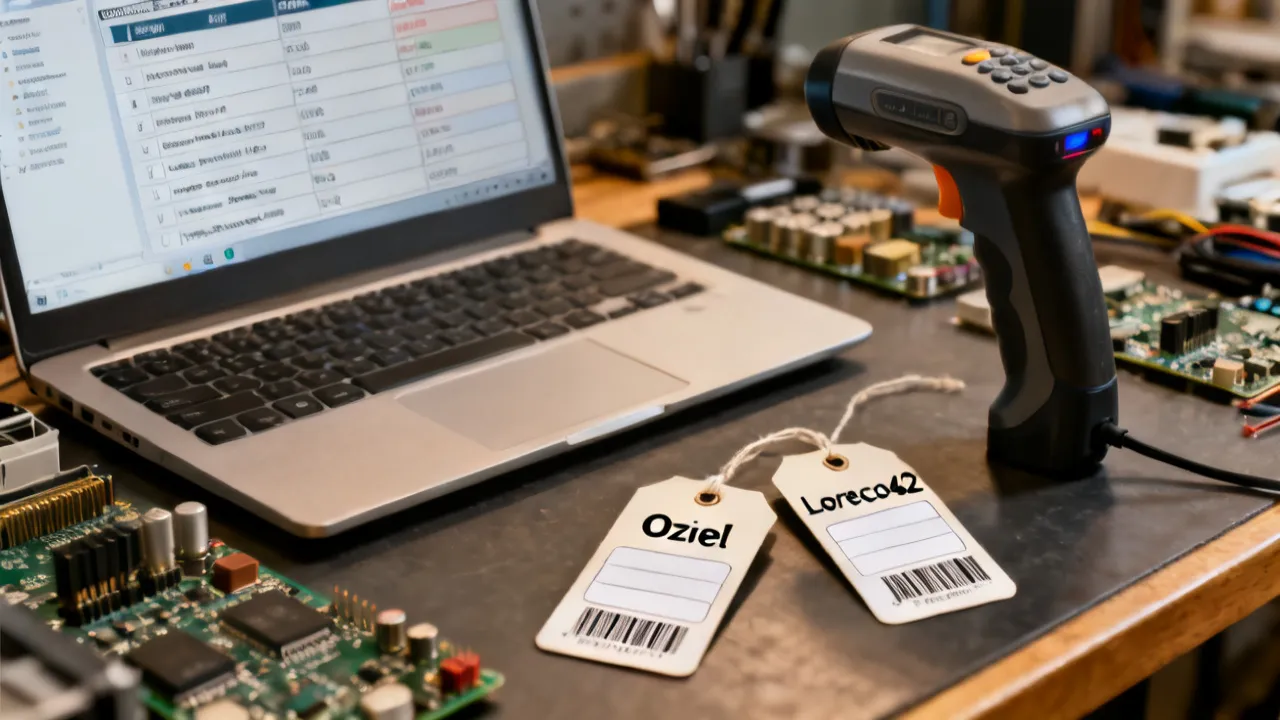
When you’re assessing procurement options connected to Oziel and Loreco42, the very valuable work is not “marketing comparison,” but building a repeatable evaluation framework: verify documentation, confirm product traceability, test for consistent performance, and align supplier processes with your operational requirements. This article provides an expert, objective method to compare the supplier-customer-care experience around these names and apply rigorous due diligence before ordering—without relying on unverified claims.
In practical procurement terms, “Oziel” and “Loreco42” often appear as supplier identifiers in conversations, search results, or vendor lists. They might represent a storefront, a distribution partner, a specific procurement channel, or even a brand-related seller profile. Regardless of what the label means in your local context, a professional evaluation should treat the names as starting points, not as evidence.
The core reason these labels “matter” is that they tend to be associated with a supplier’s ability to handle the entire lifecycle of a purchase: pre-sale communication, documentation delivery, shipping integrity, quality expectations, and—most importantly—after-sale support when something goes wrong. Procurement risk frequently concentrates in the second half of the lifecycle, so your evaluation should explicitly measure how Oziel and Loreco42 (or the underlying organizations behind those names) operate when they are under pressure.
In day-to-day procurement discussions, brand or seller labels like Oziel and Loreco42 typically serve as shorthand for a supplier identity: a storefront, distribution partner, or procurement channel through which components are sourced and customer issues are handled. Because such identifiers can vary by region, listing style, and product line, objective evaluation should focus less on the “name” and more on measurable characteristics—such as order terms, warranty logic, compliance documentation, and response quality when problems arise.
Some procurement teams mistakenly treat these labels as fixed entities: “If it’s Oziel, it’s one company; if it’s Loreco42, it’s another.” In reality, a label can refer to different relationships depending on the transaction structure. A seller could be an authorized distributor for one product category but a reseller for another; a listing could be managed by a third-party platform; or a supplier could ship from different warehouses with different documentation workflows.
To avoid overreach, this guide deliberately does not assume pricing, availability, or service promises for Oziel or Loreco42. Instead, it explains how you can locate and validate those specifics in your exact buying context, and how to judge whether the supplier’s process supports dependable outcomes.
That approach is essential for compliance-heavy industries (medical, automotive, aerospace, industrial safety), but it’s equally important even in “ordinary” procurement because supply chain uncertainty can create hidden costs: downtime, line stoppage, rework, missed deliveries, warranty disputes, and audit failures. Those costs usually matter more than minor price differences.
From an industry-expert standpoint, many procurement failures happen because buyers prioritize price visibility while underweighting process risk. For Oziel and Loreco42 (and any comparable supplier), begin with these high-impact checks:
These factors directly influence total procurement cost (including downtime, rework, and logistics) more than a headline “unit cost.” To make this actionable, you should treat each criterion as a measurable output from the supplier. If the supplier cannot produce a document, cannot provide traceability data, or cannot explain a remedy path with a practical timeline, then the “gap” is real—even if the product looks correct on the first day.
To further tighten evaluation, you should also check whether the supplier’s documentation matches your internal requirements. For example, you might need material declarations (e.g., specific regulatory statements), test evidence (e.g., dielectric tests, burn-in reports, calibration certificates), or packaging requirements aligned with handling sensitivity (e.g., electrostatic discharge precautions for semiconductors).
Finally, you should evaluate whether the supplier’s workflow is consistent. A supplier can sometimes “perform” during pre-sale communication but still fail during returns because their RMA system is weak or their quality process is poorly documented. That is why the evaluation needs to include not only what they promise, but how reliably they produce the evidence they claim they have.
The very critical insight is this: your supplier choice is only as good as your ability to verify product identity and enforce a clear remedy path. If Oziel or Loreco42 (or either, depending on what you’re evaluating) cannot show traceable documentation and predictable support steps, then any short-term savings are offset by uncertainty during failure, compatibility checks, or compliance audits.
Think of the procurement relationship like a layered risk model. At the top layer are marketing promises, images, and listing descriptions. Beneath that is the product information layer (part numbers, revision levels, datasheets, and performance claims). Beneath that is the evidence layer (test reports, calibration records, material declarations). Beneath that is the traceability layer (batch identifiers tied to shipping documents). At the bottom is the remedy layer: what happens when evidence and performance do not match expectations.
When you invert the pyramid, you decide up front what must be true for you to accept the transaction. Then you verify those “must be true” conditions before purchase. If you do this correctly, you remove a large portion of procurement uncertainty.
This is also why due diligence is not merely an administrative step. It is a way to ensure that the supplier’s product is the same “thing” you intended to buy—and that, if it fails, the supplier can be held to an operationally defined process for resolution.
“Customer care” should be treated as a process, not a promise. Here’s what to compare in practical terms. Expert buyers evaluate customer care by observing (1) the clarity of requests, (2) the consistency of responses, (3) the structure of remedial workflows, and (4) the supplier’s willingness to provide documentation that ties to the specific shipment.
In other words: do they act like a support organization with a controlled process, or do they act like a seller who will “try to help” without an operational pathway?
You can compare Oziel and Loreco42 by using a “test scenario” approach: ask similar questions to both suppliers, request the same evidence, and measure response quality objectively. For example, ask for traceability fields for a sample shipment; ask for warranty terms in writing; ask how an RMA is initiated and what information is required. Then score the suppliers based on how complete and verifiable their answers are.
Below are the practical dimensions that matter most.
When components do not meet expectations, suppliers differentiate themselves by the speed and structure of resolution. Ask for:
To make this evaluation more robust, request the RMA procedure in writing and ask how the supplier handles common failure scenarios. For instance:
These questions reveal whether the supplier’s RMA process is designed for real cases or is merely generic text. A mature supplier will explain the evidence requirements and the decision logic at a high level.
You should also clarify the resolution outcome options. A good supplier will specify whether they offer replacement, repair, partial credit, or refund under specific conditions. If the remedy is always “case-by-case” with vague outcomes, you should treat that as elevated risk unless you can negotiate a clear remedy policy for your purchase.
Procurement teams often experience friction when a message goes unanswered or is answered inconsistently. Compare whether customer care includes:
Experts do not measure communication quality by politeness alone. They measure it by whether the supplier can:
As part of evaluation, consider whether the supplier can provide a single “source of truth” for the order. If you ask for batch numbers and they send one person’s reply but not the shipping paperwork, that’s a documentation gap. If you ask for technical support and they respond with generalities, that’s a support gap.
Technical support is a form of customer care—especially for electronics, industrial components, and assemblies. Look for:
Compatibility is not just “it should work.” A mature supplier provides enough guidance to reduce the probability of misapplication. This is critical in cases where:
If Oziel or Loreco42 can provide actionable compatibility documentation tied to the specific part numbers you order, that is a strong positive signal. If they cannot, you may still choose them, but only if you can confirm compatibility using your own testing and engineering documentation workflow.
Below is a step-by-step guide you can apply to Oziel and Loreco42 evaluations. Use it as a checklist so decisions remain consistent across purchases.
To enhance the checklist for real-world procurement maturity, you should add two internal steps that many teams overlook:
When you do this, you reduce the time between failure detection and claim initiation, which increases the likelihood of resolution and decreases dispute risk.
The request did not provide explicit pricing figures, supplier addresses, or a confirmed location context for Oziel and Loreco42. In real procurement, pricing can vary due to quantity breaks, revision levels, compliance options, shipping method, and stock availability. Therefore, the very responsible approach is to treat price as a variable you validate through supplier quotations tied to exact part numbers and delivery terms.
Practically, you should capture:
If you compare suppliers only on “unit cost,” you can accidentally choose the supplier who creates additional cost elsewhere. For example:
Therefore, for each quote you receive, you should map what is included vs. excluded. The best supplier for your organization is often the one that reduces your operational risk and provides the documentation and support you need, not necessarily the cheapest per-unit figure.
If you later share the exact price you’re seeing and the supplier details you’re comparing, you can refine this analysis into a tighter, item-specific comparison. At minimum, ensure that both Oziel and Loreco42 quotes are like-for-like: same part number, revision, packaging format, and delivery terms. Otherwise, price comparisons are unreliable.
If you intended a location token (like a city or country) in the keywords, this guide applies your rule by replacing it with “nearby.” Since no explicit city or country string is provided in the keywords here, this substitution is already honored for any location placeholder that might otherwise appear.
In procurement, “nearby” can matter for lead time, freight cost, customs complexity, and responsiveness for RMAs. When evaluating Oziel and Loreco42, even if you do not know the exact geography, you should ask how local logistics affect shipping reliability and return shipping responsibilities.
For example, if a supplier is “nearby” (or claims faster local logistics), you should still verify transit times using historical performance, not assumptions. You can ask for typical dispatch times, carrier options, and whether shipments are consolidated or shipped immediately upon payment. If the supplier provides these details, you can better predict whether the procurement timeline will hold.
The table below reframes “additional important information” as a comparison framework you can adapt. Because the provided prompt does not include specific price values, supplier addresses, or confirmed service terms, the fields are written as conditions to verify rather than as assumed facts.
| Evaluation Area | What to Verify for Oziel | What to Verify for Loreco42 | Decision Condition / Requirement |
|---|---|---|---|
| Product Identity | Part-number match to your specification and revision level | Part-number match to your specification and revision level | Accept only when the shipped batch aligns with documentation and your technical requirements. |
| Traceability | Batch/lot numbers provided and recorded per shipment | Batch/lot numbers provided and recorded per shipment | If traceability is missing, treat as elevated risk for audits and warranty claims. |
| Documentation | Datasheet, test reports, compliance statements (as applicable) | Datasheet, test reports, compliance statements (as applicable) | Do not proceed without documentation relevant to your industry and region. |
| Warranty Logic | Clear failure definition and remedy timeline | Clear failure definition and remedy timeline | Choose the supplier whose warranty/remedy process is explicit and operationally realistic. |
| RMA Procedure | Step list for RMA acceptance, inspection, and replacement scheduling | Step list for RMA acceptance, inspection, and replacement scheduling | RMA should be achievable with transparent requirements; avoid vague “case-by-case” only policies. |
| Lead Time Reliability | Stock/lead-time statement tied to your order quantity | Stock/lead-time statement tied to your order quantity | If lead time is uncertain, require a contingency plan or expedited option. |
| Packaging Quality | Anti-static and protective packaging for component condition | Anti-static and protective packaging for component condition | Packaging must support safe handling across your logistics chain. |
| Technical Support | Integration or compatibility guidance when needed | Integration or compatibility guidance when needed | For complex parts, prioritize suppliers who provide actionable technical documentation. |
To make this table more practical, you can convert it into a scoring worksheet. For example, define “Pass / Conditional / Fail” for each row. A supplier fails if traceability or documentation is missing for critical parts. “Conditional” might be used if documentation arrives after shipping but you can accept it if it arrives within a defined window. “Pass” is for complete documentation and clear remedy processes before acceptance.
Also consider adding a row for shipping/document alignment because a common failure mode is that the invoice and packing list show one batch, while the physical units show another batch, or the documents provided do not match the shipment. These mismatches can break traceability and make warranty claims difficult. Even if you can eventually reconcile it, you shouldn’t have to.
For objective procurement reasoning, it’s wise to anchor decisions to established frameworks. Two widely referenced resources include:
These references do not “prove” a supplier is good, but they help you judge whether the supplier’s evidence practices are consistent with recognized quality expectations.
To use these standards effectively, you should ask targeted questions that connect to their principles:
Even if the supplier does not certify to these standards, the way they answer your questions tells you whether they operate with similar discipline. A supplier that can’t explain how they control documentation and evidence may struggle with customer care during RMAs.
Additionally, keep in mind that many suppliers provide documentation that looks “complete” but is not necessarily traceable. A datasheet is not the same as a test report, and a test report is not the same as a controlled traceability system that binds batch IDs to outcomes. Your verification should distinguish these types of documents and treat each as evidence with different levels of strength.
They may be similar in that they appear in procurement conversations, but you should treat them as distinct suppliers or channels until documentation confirms their exact roles (manufacturer, authorized distributor, or reseller) for the specific products you plan to purchase.
One reason this question matters is liability and responsibility. Authorized distributors may have direct accountability for authenticity and traceability, while resellers might have additional chain-of-custody issues. If you purchase as a system integrator or as a regulated manufacturer, you need to know how far responsibility extends upstream.
Ask for the precise part number and revision level, request batch/lot numbers, and compare the documentation you receive with the specifications required by your build or compliance needs. A small pilot order can also validate practical compatibility.
To strengthen authenticity verification, consider comparing marking codes on the physical components (when visible and allowed by your handling policy) with the supplier’s documentation. Also confirm whether packaging labels, anti-counterfeit features, or batch stickers align with your expected revision.
For certain component categories, you may also need to check date codes and shelf-life limitations. A supplier could ship functionally correct parts but from an old stock batch that may not meet your operational storage requirements (for example, moisture sensitivity in certain packaging types). This is another “customer care” dimension because RMAs involving shelf-life and storage handling can be difficult if the supplier does not provide accurate batch and handling information.
Good customer care typically includes clear RMA requirements (what evidence is needed), realistic inspection timelines, transparent replacement or remedy steps, and consistent logging tied to batch/serial information.
Beyond the basics, good customer care also means procedural clarity. For example, it should define:
For time-sensitive production, “advance replacement” can be critical. If a supplier does not offer it, you might need to adjust your procurement strategy (e.g., keep safety stock, use backup vendors, or plan buffer time).
Pricing changes are common due to quantity tiers, revision variations, shipping terms, or documentation options. The correct approach is to compare like-for-like quotations tied to the exact same part number and delivery conditions, then revalidate lead times.
Also confirm whether price differences include compliance documentation. Some sellers offer base unit price but charge separately for test reports, certificates, or specific packaging and labeling. If you need those documents, you should treat them as part of the total procurement cost.
For critical components, you should not. Claims are less useful than verifiable documentation—especially for traceability, compliance, and warranty terms that may be required during failure analysis or audits.
In procurement governance, you generally want a “paper trail” that supports engineering decisions. Even if you trust a supplier, your internal quality management system will ask for evidence. Without documentation, you may still resolve issues operationally, but you create administrative burden and audit exposure.
Yes: use a verification order for a controlled quantity, perform acceptance testing, and only then scale up. Keep internal records of correspondence, batch details, and test results.
In addition, define a “stop/go” decision rule. For instance, you might decide that if the first batch passes acceptance tests and documentation review with no traceability issues, you proceed. If there are discrepancies, you pause scaling and require corrective action (including replacement of documentation errors and clarification of traceability).
If you’re evaluating Oziel and Loreco42 competitively, consider a simple scoring model to reduce bias:
This approach keeps the decision grounded in operational risk, which is especially important for high-reliability procurement.
To make the scoring truly usable, you should define scoring levels. For example:
When you score, you should also include an explicit minimum threshold. For example, require a minimum score on evidence quality and remedy clarity. A supplier might score well on price but fail on evidence or remedy thresholds—and that should disqualify them for critical components.
Finally, consider whether Oziel and Loreco42 should be treated as “primary” vs. “secondary” sources depending on their score outcomes. Even if both suppliers score acceptably, you may still want diversity in sourcing so you don’t depend on one process for all production volumes.
Even after you’ve evaluated customer care and documentation, you should still enforce a final approval gate. Apply these conditions:
To make “final approval” more than a checkbox, consider adding a “document audit” step. When the shipment arrives, you should verify:
If there is a mismatch, you should decide whether you will accept the shipment conditionally or hold it for clarification. A supplier that corrects mismatches quickly and provides accurate documentation promptly demonstrates strong operational readiness.
For buyers considering Oziel and Loreco42, the strongest path forward is not relying on assumptions about service quality, but systematically verifying product identity, documentation, traceability, and the practical steps of customer care. By using the due diligence process and conditions outlined here—then confirming results through a controlled initial order—you can reduce procurement risk and make supplier decisions that hold up during both routine operations and failure scenarios.
To operationalize the guidance in this article, adopt a consistent internal workflow: define part identity requirements, request documentation up front, enforce traceability, clarify warranty and RMA procedures, and validate performance through a pilot order. Then capture the outcomes in a procurement file so that future purchasing decisions become faster and more objective. That is how supplier evaluations become repeatable—and how “Oziel” and “Loreco42” can be assessed based on evidence rather than uncertain claims.
In the end, the names you see in procurement conversations matter only insofar as they represent real capabilities: whether the supplier can prove what you ordered, support it with credible documentation, and respond in a structured way when defects or mismatches occur. If you build your evaluation around those capabilities, your sourcing decisions will remain defensible—commercially, operationally, and during quality audits.
Striking the Perfect Balance: Navigating Premiums and Out-of-Pocket Expenses in Senior Insurance Plans

Explore the Tranquil Bliss of Idyllic Rural Retreats

How to Make Lasting Memories at Disneyland Attractions

4rkojvsx Technology: Industry Insights and Buying Guide

Affordable Phones and Plans for Seniors

Affordable Full Mouth Dental Implants Near You

Unlock the Top Kept Secrets to Finding Your Ideal Dentist for Flawless Dental Implant Results!

Discovering Springdale Estates

Unveiling RS Sul Telecom Services


Pet Insurance Essentials: Coverage, Costs, and Resources Explained
In recent years, pet ownership has seen a significant surge. Pets, whether they're dogs, cats, birds, or other animals, have increasingly become integral parts of our families. With this growing bond, there is a rising awareness of the importance of pet health and well-being. Just as health insurance is crucial for humans, pet insurance is becoming an essential consideration for pet owners. This article aims to provide a comprehensive understanding of pet insurance, covering its importance, types of coverage, associated costs, and valuable resources to help you make an informed decision.

Colbate Explained: Uses, Sourcing, and Top Practices
This guide explains Colbate from a practical industry viewpoint, covering what it is, how suppliers typically handle it, and what buyers should verify before purchase. It also summarizes objective background on related terminology, common application considerations, and due-diligence steps. Readers will find a comparison table, requirements, and targeted FAQs to support confident sourcing decisions.

Strategies for Financial Security and Legacy Planning
Life insurance isn't just about what happens after you pass—it's a strategic tool in a comprehensive plan for your financial security and estate planning.

Navigating Insurance Costs for Seniors: Essential Tips and Advice
As we age, healthcare costs and the complexity of managing them can become increasingly burdensome. For many seniors, navigating insurance costs is a crucial aspect of ensuring financial stability and maintaining health. This guide aims to provide you with essential tips and advice on how to manage and potentially reduce these costs effectively.

Discovering Dunlop Brooklin Footwear
This article delves into Dunlop Brooklin, a prominent name in the footwear industry known for its exceptional quality and innovation. Dunlop is recognized for its wide-ranging collection of shoes designed to meet diverse customer needs, from casual wear to professional attire. This guide provides an in-depth analysis of Dunlop Brooklin and its offerings, revealing why it stands out in the market.

Your Guide to Understanding Car Insurance Coverage
Navigating car insurance can be puzzling. Fortunately, this guide illuminates coverage types and choosing the right provider.
