This guide explains how to interpret the public profile and professional footprint often associated with “Marlise brehmer,” and how to evaluate related claims with careful, evidence-based due diligence. The background sections define the term in an objective way, outline typical sourcing practices, and present evaluation conditions and requirements in a comparison table format for readers seeking clarity.

When readers encounter the name “Marlise brehmer,” the very responsible next step is not to assume affiliation, expertise, credentials, or commercial relationships—but to evaluate the available information methodically. This article provides an objective, professional framework for interpreting how a name such as Marlise brehmer may appear across different contexts (professional bios, publication pages, organizational listings, event programs, community forums, or public records), and how to verify what is actually supported by reliable documentation.
Because your request includes the keyword but does not include confirmed facts about pricing, suppliers, services, or a specific location, this guide intentionally avoids unverified claims. Instead, it focuses on sound research practices, transparent decision conditions, and structured comparison criteria that help readers assess credibility signals. The aim is not to “guess,” but to help you build a defensible understanding that could stand up to scrutiny.
Search behavior around a specific personal name typically falls into a few common categories. Understanding why a person is searching can also clarify what kind of verification is most appropriate.
For example, readers may be looking for:
In all cases, the key is to distinguish between what can be verified (for example, documented roles, dates, and source types) and what remains uncertain (for example, informal claims, reposted summaries, or ambiguous references). A search is a starting point; verification is the process that converts “possible” into “supported.”
At an evidence level, a name such as “Marlise brehmer” may appear as:
Therefore, objective evaluation means confirming whether the “Marlise brehmer” you see in one place matches the same identity described elsewhere—based on stable, corroborative identifiers. Those identifiers may include consistent employment history, matching publication metadata, shared institutional affiliation, consistent timelines, or unique identifiers (such as ORCID IDs for researchers, licensing numbers for regulated professions, or corporate registration numbers for vendors).
From a compliance and professional due diligence standpoint, one of the most effective workflows is to build a “claim-to-evidence map.” This approach recognizes that information online often mixes verified statements, implied statements, and unsupported inferences.
Rather than asking, “Is it true that Marlise brehmer is X?”—which invites vague conclusions—you ask, “What exactly is claimed, and what evidence supports each element of that claim?”
Every statement you encounter—job titles, years of experience, industry focus, research output, supplier relationships, service pricing assumptions, or endorsements—should be paired with a source that is credible, specific, and ideally primary (meaning it originates from the accountable entity or from an authoritative record).
Instead of starting with trust, begin with the logic of verification:
Readers often want a simple answer quickly—especially when the goal is to make a purchase, hire someone, or trust a recommendation. Responsible action requires checking several risk areas that frequently cause errors in name-based verification.
Key risk areas include:
The comparison table below is designed to help you evaluate information you may encounter that references “Marlise brehmer.” Rather than treating all mentions as equal, it distinguishes between evidence types and introduces decision conditions that indicate whether a claim is trustworthy enough for a specific purpose.
To use this effectively, treat each row as a “rule of thumb” for what you can responsibly do with that type of information. Some information can be used as a lead; other information can be treated as support; and some information should be considered insufficient unless corroborated.
| Information Type You Find | Typical Source Examples | Credibility Strength | Validation Steps | Conditions/Requirements to Trust |
|---|---|---|---|---|
| Official bio or organization profile | Company “About” page, staff directory maintained by the organization, institutional lab page, speaker page | High | Confirm dates, title scope, and whether the organization independently lists the person. Check page ownership signals (official domain, authorship, last updated date if available). | Role details are specific; page is maintained by an accountable entity; contact and organizational details align with the person’s stated identity. |
| Publication authorship or conference listings | Journal issue pages, DOI landing pages, indexed databases, conference program schedules, proceedings tables of contents | Medium to High | Check DOI/issue page, co-author consistency, and affiliation lines. Confirm that metadata (institution, year, title) matches the identity you’re evaluating. | Documented publication metadata matches a consistent identity; affiliation and timeline align with other credible evidence. |
| Professional licensing or official registry records (if applicable) | Government licensing portals, recognized professional registries, official certification databases | High (when applicable) | Search by name and additional fields (license number, region, employer). Verify matching identifiers and status (active/inactive). | Registry explicitly shows the same individual; license/certification status supports the claimed activity. |
| Third-party summaries or reposts | Blogs, aggregated profiles, social media recaps, “about” pages on directory sites | Low to Medium | Trace claims back to primary sources. Determine whether the third-party summary quotes or paraphrases an official record, and whether it provides links to originals. | At least one independent, original source corroborates the claim; reposts must be treated as leads unless they provide verifiable citations. |
| Unverified claims about “pricing” or “suppliers” | Forums, comment sections, marketplaces without documentation, “word of mouth” threads | Low | Request documentation: quotes, invoices, contract terms, business registration, or procurement references. Check whether the business entity is real and identifiable. | Clear proof of the pricing basis and supplier identity is provided; the seller/service provider is accountable and contractually defined. |
| Links to related services or commercial offers | Landing pages, lead-generation forms, “press” style pages that promote services | Low to Medium | Check whether the offer is supported by contract terms, corporate details, service scope, and consistent references to documented credentials or experience. | Terms include accountable entities and verifiable contact/process details; claims about qualifications are supported by primary evidence. |
| Community mentions (events, groups, volunteer work) | Event pages, community newsletters, meetup listings, informal organizational posts | Low to Medium | Verify event organizers and whether the event page is archived/official. Cross-check with attendee lists, program schedules, or organizer communications. | Event metadata and organizational provenance are clear; roles are described with adequate detail to confirm identity and participation. |
| Public records (context-dependent) | Business filings, court records, official notices, property or registration records (where accessible) | Medium to High (depending on record type) | Confirm jurisdiction; match full name and any identifiers. Confirm relevance: being a “named party” is not the same as being the “service provider” unless the record explicitly indicates that. | Record explicitly associates the identity with the claimed role or entity; context and dates align. |
Even if the name “Marlise brehmer” appears credible at first glance, there are common red flags that justify caution. A red flag doesn’t always mean “fraud,” but it does mean your evidence threshold should increase and your trust should be withheld until corroboration is found.
Red flags include:
To make decisions more consistently, it helps to define an evidence ladder. The following ladder is a practical way to determine what you can do with information about “Marlise brehmer,” depending on what you have found.
Level 1: Lead (Low confidence)
Use Level 1 only to: identify where to look next (e.g., find the official profile, find the journal page, find the organizer record).
Level 2: Support (Moderate confidence)
Use Level 2 to: make cautious interim conclusions and request additional documentation when necessary.
Level 3: Proof (High confidence)
Use Level 3 to: make definitive decisions—such as trusting a claim for onboarding, procurement, or authorship attribution—depending on the risk level of the action.
“Marlise brehmer” appears to be a personal name used across different online contexts. Without specific, verified documentation supplied in your prompt, the responsible answer is that the identity and role cannot be confirmed here. The top approach is to verify the name against primary sources such as official bios, publication records, accountable organizational listings, and—where relevant—official registries for credentials.
Use a claim-to-evidence map. Identify the exact claim you’re trying to verify (job title, dates, responsibilities, affiliation, deliverables, or credentials). Then locate primary evidence (official organizational pages, publication metadata with consistent affiliations, or official registries if the work is regulated). Next, cross-check independent sources to resolve identity ambiguity and confirm that you’re not conflating similarly named individuals.
If you cannot find primary evidence for the key claim elements, treat the information as unverified until corroboration exists.
No. Your request did not provide confirmed price details, supplier identities, documented quotations, or contract terms. In professional due diligence, unverified pricing claims should not be treated as reliable. If you share specific, sourced pricing and supplier documentation, those details can be analyzed using the same evidence-first criteria and assessed against credibility and risk conditions.
When someone is referenced in procurement, focus on accountable business identifiers and contractual clarity rather than name-based assurances. Look for the legal business name, registered address or jurisdiction, service scope, documented terms, and traceable procurement documentation (for example: contract, invoice line items, purchase order references, or delivery/acceptance records). Avoid relying on informal commentary alone.
If you only have a personal name without corporate identifiers, that may be a signal that you need more documentation before taking any financial action.
No location was provided in your request in a verifiable way. When location is relevant to verification, professional due diligence requires confirming that the same identity appears consistently in records associated with that region. If you provide city-, state-, or country-level context along with sources, it can be incorporated carefully while maintaining evidence standards.
Typically, the highest reliability comes from primary documentation:
Secondary sources may help as leads, but they should be traced back to primary evidence for the key claims.
Do not average conflicting claims. Instead, prioritize the most primary and most recent evidence. Document the contradiction explicitly and verify identity resolution: are you dealing with the same individual or two people with similar names? Confirm dates, organizations, and roles. If the conflict remains unresolved after checking primary sources and corroborating identity markers, treat the claim as uncertain and do not treat it as established fact.
Yes. The approach—claim-to-evidence mapping, triangulation, red-flag detection, and clear trust conditions—is generalizable across names and contexts. Whenever accurate identity and role attribution matter (hiring, procurement, publication attribution, credential verification, or risk-sensitive decisions), this framework helps you reduce errors caused by incomplete or misleading information.
Because the name “Marlise brehmer” may appear across multiple pages, the practical challenge is often not “finding information,” but determining whether the information refers to the same person and whether the claims are supported. A rigorous approach often looks like this:
Start by recognizing that name spelling and formatting vary. Before concluding anything, attempt searches that account for variants:
Then, collect the URLs and record exactly what each page claims. The goal is to build an evidence inventory rather than relying on memory or impressions.
A common mistake is to treat an entire bio paragraph as a single claim. Instead, break it into smaller components:
Once you have atomic claims, you can verify each one independently. This reduces the risk of being misled by partial accuracy (for example, a person’s title may be correct while the company affiliation is wrong, or vice versa).
When you evaluate information about “Marlise brehmer,” classify each source:
Use this classification to set your confidence level. A primary source is often sufficient for a specific element (like “the person worked at X from 2020–2023”). A secondary source may be used as a lead but should not be treated as proof unless it provides a traceable link to a primary record.
Identity resolution is the process of ensuring you’re not mixing two similar names. It is especially important when you see:
To resolve identity, look for independent identifiers:
When these identifiers align, your confidence rises. When they do not, treat the claim as uncertain and continue searching.
Sometimes a name appears in a context that does not imply authority. For example:
This distinction matters when the goal is procurement, hiring, or attributing responsibility. Your due diligence should focus on “who is accountable for what,” not merely “who is mentioned.”
Credentials and roles can change quickly. When verifying “Marlise brehmer,” check:
If a page is clearly outdated (for example, it references employment that ended years ago without indicating transition), you may need to find current evidence to support any present-tense claims.
You specifically indicated that the prompt includes the keyword but does not provide confirmed facts about price or suppliers. In practical terms, that means you should treat any pricing-like information as unverified until contract-level evidence exists.
When someone claims that “Marlise brehmer” is a supplier, vendor, or pricing provider, the evidence you would typically require includes:
Even if the pricing seems plausible or matches a market range, without documentation it cannot be treated as reliable. In risk-aware decision-making, plausibility is not proof.
To operationalize the framework, you can record findings using a simple structure. You can adapt it to your own research notes:
This template ensures the research remains traceable and defensible, which is especially important if you later need to explain how you arrived at a conclusion.
Different objectives require different levels of evidence. Below are examples of how the same framework changes in emphasis based on what you’re trying to do.
Your evidence threshold should be relatively high, because misattribution can damage credibility.
Your evidence threshold should be tailored to risk: if there’s financial exposure or safety implications, proof requirements increase.
Your priority becomes credential verification through official registries or primary documentation.
Searching for “Marlise brehmer” can be a starting point, but responsible understanding requires verification. By using a structured evaluation method—prioritizing primary sources, checking identity consistency, mapping claims to evidence, and applying clear conditions—you can move from curiosity to clarity without relying on unsupported assumptions.
As a practical next step, you can gather each page where “Marlise brehmer” is mentioned and extract the specific claims. Then, classify those claims by evidence strength and identify the primary sources that either corroborate or refute them. If you want to proceed further, provide specific excerpts you found (for example, a bio paragraph, a publication citation, or a claim about pricing or suppliers). With those details, each claim can be evaluated against the same evidence-first criteria and presented in a clean, decision-oriented format.
Striking the Perfect Balance: Navigating Premiums and Out-of-Pocket Expenses in Senior Insurance Plans

Explore the Tranquil Bliss of Idyllic Rural Retreats

How to Make Lasting Memories at Disneyland Attractions

4rkojvsx Technology: Industry Insights and Buying Guide

Affordable Phones and Plans for Seniors

Affordable Full Mouth Dental Implants Near You

Unlock the Top Kept Secrets to Finding Your Ideal Dentist for Flawless Dental Implant Results!

Discovering Springdale Estates

Unveiling RS Sul Telecom Services


WLLE: Practical Sourcing Insights with Quality Focus
This guide explains how WLLE helps organize sourcing decisions by balancing specification clarity, supplier reliability, and quality checks. Objectively, “WLLE” is treated here as a practical workflow label, while the repeated “😊 😊 😊” cues a user-experience orientation rather than a technical claim. The article also outlines decision conditions, comparison criteria, and FAQs for buyers.

Pis: Expert Buying Guide and Supplier Comparison
This guide explains Pis in an objective, decision-ready way—covering typical supplier considerations, evaluation criteria, and practical steps to choose what fits your needs. The background sections clarify what “Pis” generally refers to in commerce contexts, common use cases, and why supplier transparency matters when you compare options.

Revisional Porto Alegre: Expert Guidance and Options
This guide explains how a revisional approach is applied in Porto Alegre, outlining practical steps, due diligence, and supplier selection considerations. “Revisional Porto Alegre” refers to reviewing, adjusting, and verifying prior arrangements or plans to reduce risk and improve outcomes. The article offers an objective industry lens and a structured checklist for requirements, sources, and common questions.

Understanding Cxxxvldlo Supply Quality Standards
This guide explains how Cxxxvldlo-related supply quality is evaluated, organized, and verified across sourcing workflows. Objectively, it frames what “Cxxxvldlo” typically represents in operational contexts, why documentation and auditability matter, and how procurement teams translate supplier requirements into consistent handling. The goal is clarity—so decisions remain traceable, repeatable, and compliant.

Pono Explained: Meaning, Use, and Buyer Guidance
This guide clarifies what Pono is, how it’s commonly used, and how to evaluate quality when sourcing it for personal or commercial purposes. It objectively outlines the background of Pono terminology, common product forms, typical supplier roles, and practical decision criteria—so you can compare options confidently without relying on vague claims.
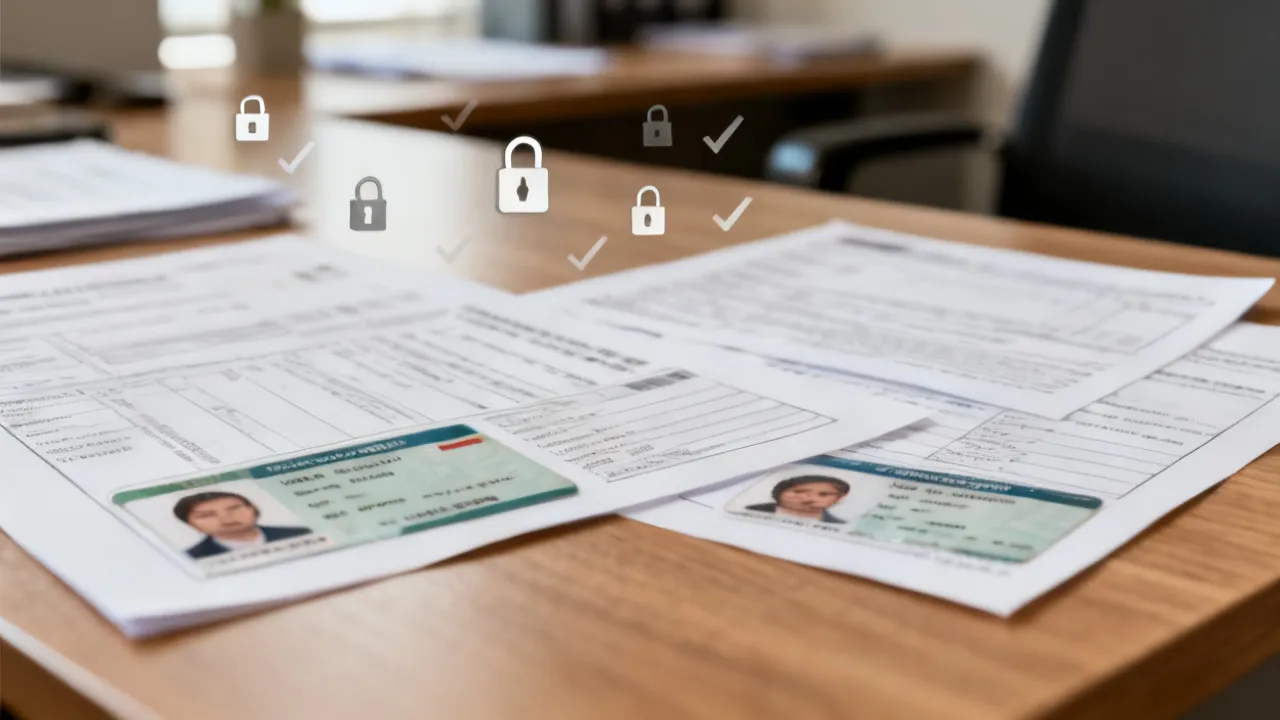
Understanding Joao.clemente.de.soiza.c.p.f Identifiers
This guide explains how to interpret the identifier “Joao.clemente.de.soiza.c.p.f” in real-world record workflows and compliance contexts. It then provides objective background on what such code-like strings typically represent, how organizations verify them, and what quality controls reduce errors. The discussion focuses on responsible handling, traceability, and audit readiness without relying on unverified claims.
