This guide explains how Sightsavers Truckers models support vision access and why logistics, training, and community partnerships matter. Sightsavers Truckers is a practical pathway that combines mobile distribution, outreach planning, and operational oversight to help underserved communities. The background context below outlines how these programs typically work, what stakeholders should prepare, and which requirements guide safe, effective service delivery.
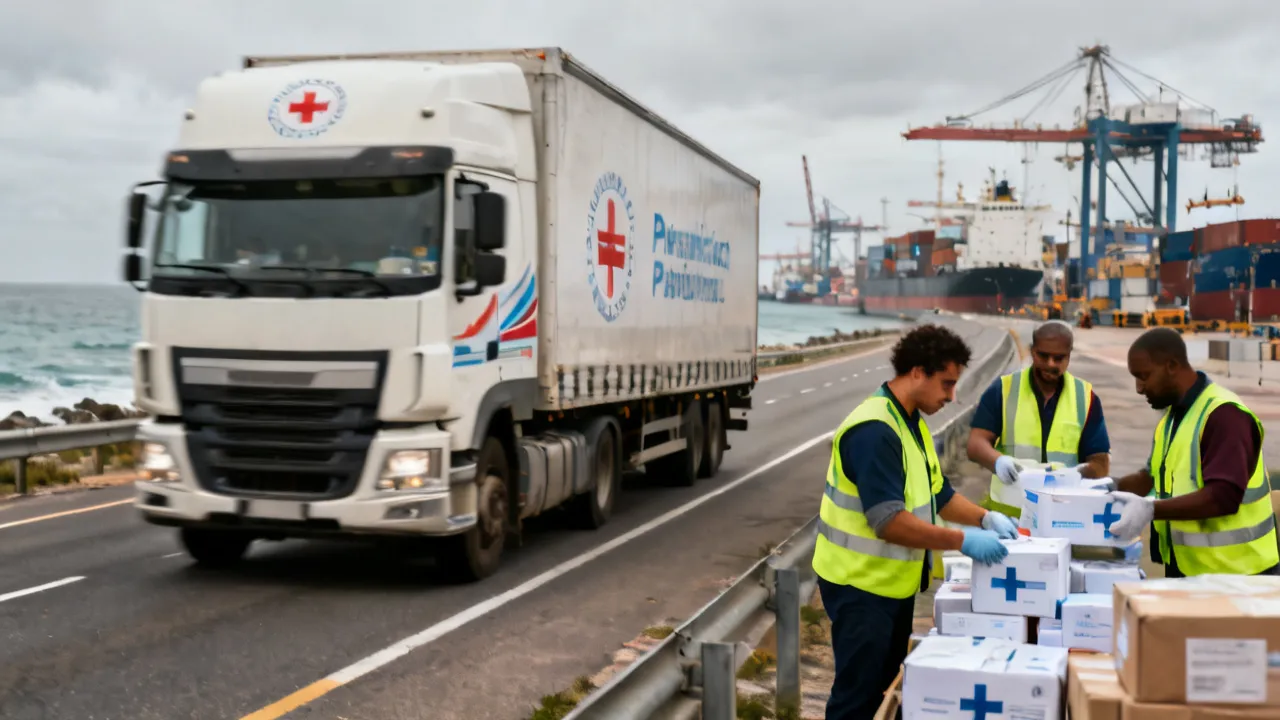
Sightsavers Truckers represents a logistics-and-outreach approach for vision-related support, where mobile capability and structured delivery planning help ensure services reach communities that are difficult to access. In practice, truck-based routes support coordination between field teams, local partners, and health systems—reducing the “last-mile” gap that often prevents timely assessment and care. From an operations standpoint, the key value is not only movement of people or supplies, but also the discipline of scheduling, quality control, and referrals so that any identified needs translate into follow-up pathways.
When stakeholders evaluate truck-based outreach—especially those aligned with public-health and eye-care initiatives—two questions typically dominate: (1) Can the program reliably reach target communities with sufficient capacity? and (2) Does the program have the governance and clinical workflow to convert screening or assistance into meaningful outcomes? A well-run Sightsavers Truckers-style system aims to answer both through route planning, staff training, defined handover points, and consistent documentation.
In other words, the model matters because vision impairment is frequently time-sensitive. Many eye conditions progress quietly; delays in assessment can lead to worsening outcomes or reduce the effectiveness of interventions. Truck-enabled outreach attempts to remove friction from early steps—community notification, arrival, assessment, and basic support—then routes patients toward appropriate services when issues are identified. The program’s value therefore depends on the integrity of the full “service chain,” not just on whether a vehicle can reach a location.
Although “truckers” often sounds like the people behind the wheel, the deeper operational framing is that a fleet or route-capable unit acts as a mobile platform. That platform can carry materials (for assessments, refraction support, basic supplies), enable team travel, and function as a coordination hub during outreach days. In many outreach ecosystems, this structure improves predictability: teams can synchronize with village leadership, health posts, and regional facilities.
From an industry expert perspective, the practical design matters. Transport alone does not create impact unless it is paired with:
That is why programs described in the spirit of Sightsavers Truckers are top viewed as service delivery systems. Their success is linked to how well logistics and health processes are integrated. A useful way to think about it is that the truck is “infrastructure” for outreach—like a clinic on wheels—but the clinical and governance components determine whether the infrastructure produces real patient outcomes.
This integrated framing also clarifies why different organizations may use distinct terminology while operating with similar logic. Some programs may call it mobile outreach, outreach caravans, eye health days, or distributed screening units. The defining feature is not the truck itself but the structured ability to execute a repeatable workflow across challenging geographies, then feed results into systems capable of follow-up.
Eye health challenges frequently intensify where geography, cost of travel, and service availability combine. Even when regional hospitals exist, the distance—paired with transport costs and limited appointment windows—can block early assessment. In such environments, truck-enabled outreach models can reduce barriers by bringing screening or support closer to communities, then linking people to follow-up care.
To remain objective, it is important to note that truck-based outreach is one component in a broader eye-care pathway. Sustainable improvement generally requires continued capacity building, supply continuity, and integration with local health services. The transport model helps, but it cannot replace system-level planning.
Last-mile access is particularly relevant for vision care because outcomes depend on continuity. A single outreach event can detect problems, but patients often need further examination, appropriate optical correction, monitoring, or treatment. If the post-screening pathway is weak—if referral destinations are overwhelmed, if follow-up is unclear, or if documentation is inconsistent—then the initial “reach” does not translate into “care.” Truck-enabled outreach attempts to close that gap by incorporating partnership mechanisms and referral workflows into the outreach day itself.
Operationally, the last-mile barrier is not only physical distance. It is also:
A logistics-and-outreach approach is designed to address several of these simultaneously. Bringing services closer reduces time and travel costs; community engagement improves awareness; documentation and referral alignment reduce confusion and administrative drop-off.
An expert assessment of logistics programs in health outreach usually focuses on risk management and workflow consistency. For a Sightsavers Truckers-style initiative, strong results are associated with:
When these elements are present, truck-based outreach becomes more than movement—it becomes a repeatable process with measurable outputs. A program should be able to demonstrate consistency across cycles, not only on the “successful” day when turnout is high. Consistency means that even when turnout is lower, weather is worse, or equipment needs adjustment, the service chain still functions: patients are assessed reliably, results are recorded, and referrals are tracked.
To strengthen this lens, organizations often use operational performance indicators. While specific metrics vary by program, common categories include:
These metrics matter because they help identify where problems occur. For example, if attendance is high but referrals are incomplete, the failure is likely in clinical governance or documentation—not in community outreach messaging. Conversely, if screenings are complete but people do not reach referral destinations, the failure may be in patient guidance, partnership capacity, or continuity processes.
You may encounter varying “price” references when researching truck-based outreach programs—ranging from vehicle operations to staffing costs and equipment expenses. However, exact pricing is rarely universal because it depends heavily on distance, road conditions, fuel volatility, staffing structure, import rules for devices, and the scope of services delivered. For that reason, any decision-making should be based on a line-item budget rather than an assumed global average.
In a procurement or program-planning context, a responsible approach is to request a breakdown from relevant suppliers (or program operators) covering:
This is the very objective way to treat “price information” in relation to Sightsavers Truckers style initiatives: it ensures decisions reflect the actual operating context of the route and the service scope.
It also helps prevent a common planning mistake: focusing narrowly on the truck cost while underestimating the operational overhead required to run outreach day workflows. Outreach is not only about moving a truck to a location; it is about ensuring that the right equipment is ready, clinicians are trained to execute the assessment workflow, and referral destinations can process new patients. A budget that omits governance, data capture, or continuity planning can lead to an apparently low “transport” cost that later becomes expensive due to rework, missed referrals, or postponed follow-up.
Supplier performance is often the difference between a program that looks good on paper and one that performs in the field. For truck-based outreach frameworks, supplier due diligence should emphasize reliability, maintenance capability, and documentation readiness. When organizations identify supplier options, they typically assess:
In practice, “supplier details” for a truck-based program should be treated as part of operational governance. A credible supplier can help reduce downtime, stabilize scheduling, and protect service quality.
Supplier reliability should also be assessed through scenario thinking. For example:
These questions may not appear in standard quotations, but they strongly influence whether an outreach schedule can hold. A program designed around a truck platform must assume that disruptions can happen; the decisive factor is whether operations are resilient.
When outreach targets rural settlements or peri-urban outskirts, local customs and daily rhythms influence turnout. Outreach teams often coordinate around market days, school schedules, religious observances, and community gatherings. In communities that experience long travel times to health facilities, the outreach day can become a focal event—so consistent communication and respectful engagement are essential.
Logistics teams also need to anticipate conditions that vary from place to place. Even without naming a specific city or country, it is reasonable to expect differences in road quality, seasonal flooding, and infrastructure density. These realities shape route planning, vehicle selection, and contingency procedures. This is where a Sightsavers Truckers-style model’s operational discipline becomes particularly valuable.
Localization also applies to patient experience. The outreach workflow must be understandable and comfortable for community members who may not be familiar with referral systems, optometry terminology, or screening procedures. Teams often need to provide messaging that clarifies:
When the messaging is aligned with local expectations and decision-making structures, turnout improves and referral compliance becomes more feasible. Conversely, if outreach is treated as a one-off event rather than a planned service day connected to follow-up, people may leave after screening without understanding the next steps.
To understand the role of truck-based programs, it helps to consider the broader workflow for vision services. Typical components include community notification, arrival scheduling, screening/assessment, provision of appropriate basic support where indicated, and referral for complex cases. Many programs also integrate health education—addressing prevention, symptom awareness, and care-seeking behaviors.
As a general reference for public-health relevance, the World Health Organization emphasizes the importance of eye health services within primary health care and community access strategies. While this guide does not assume outcomes for any specific program, it aligns with the general principle that access strategies must connect screening to follow-up pathways. (For general eye-health service framing, see: WHO publications on eye health and integrated service delivery.)
From a workflow standpoint, eye-care programs often encounter a few recurring bottlenecks:
Truck-enabled outreach models attempt to preempt these bottlenecks by integrating logistics readiness (equipment readiness, staffing coordination) with clinical governance (workflow protocols, referral mechanisms). When done well, the result is a functioning pipeline rather than a stand-alone screening event.
The following table compares common choices teams make when implementing truck-enabled outreach. This is a framework for thinking, not a substitute for program-specific planning.
| Area | Option A: Centralized setup | Option B: Truck-based outreach | Option C: Hybrid model |
|---|---|---|---|
| Access approach | People travel to facilities | Services come closer to communities | Some services travel; some people are guided to nearby facilities |
| Community scheduling | Appointment-based, facility-led | Route-based, community-coordinated days | Route days plus scheduled facility catchments |
| Operational complexity | Lower transport burden | Higher logistics and route risk management | Moderate complexity balanced across channels |
| Clinical continuity | Depends on travel and follow-up | Depends on referral coordination after outreach | Often stronger continuity due to multi-channel handovers |
| Data and reporting | Facility records drive outcomes | Mobile records require strict documentation protocols | Integrated reporting across sites and routes |
| Common top-fit scenarios | When travel is manageable | When distance and costs are significant barriers | When both facility coverage and last-mile gaps exist |
While truck-based outreach can be a powerful tool, it often performs best when integrated into a continuum of care. In hybrid models, the truck can serve as the gateway that identifies needs and initiates referrals, while nearby facilities complete diagnostics or treatment. This improves overall continuity and can reduce pressure on the mobile unit.
When assessing outreach models that resemble Sightsavers Truckers, it is advisable to ground decisions in established public-health guidance rather than relying on unverified claims. For general eye health and service access framing, consult:
Note: This guide intentionally avoids quoting specific performance figures for “Sightsavers Truckers” because such numbers are often program- and location-specific and require verified reporting for accuracy.
A useful approach to evidence is to treat logistics as an implementation domain, not merely a cost or convenience. Evidence in this area often shows that outreach effectiveness hinges on operational integrity—staff training, scheduling discipline, reliable equipment, referral linkages, and patient instructions. Therefore, decision-makers should look for documented processes, not just outcomes. A program that reports outcomes but cannot explain how those outcomes were achieved may be less transferable or less reproducible in new contexts.
In addition, evidence should be interpreted through feasibility lens. A model that succeeds in one context may fail in another due to differences in road conditions, referral destination capacity, population density, or supply chain reliability. Truck-based models can be tailored, but they require context-aware planning and governance.
Below is a practical, step-by-step approach that mirrors the operational logic behind truck-enabled outreach, including programs conceptually aligned with Sightsavers Truckers.
To expand this into a more robust implementation blueprint, organizations often add a few practical sub-steps. These sub-steps help reduce common failures in outreach programs, especially in areas where health infrastructure is already strained.
Even within a concise step-by-step process, teams benefit from operational “micro-decisions” that ensure field execution aligns with planned workflow. Consider adding the following sub-steps where relevant.
Before departure, the program can run a readiness audit that includes:
This reduces the risk of arriving and discovering that a key element is missing—an issue that can derail not only clinical output but also community trust.
Outreach days rarely run perfectly on time. Teams often introduce buffers so that if turnout is higher than expected, service quality does not collapse. Buffers can include:
While some organizations prefer maximizing the number served, quality-first approaches help protect outcomes and reduce referral errors.
In mobile outreach, equipment failure can have outsized consequences. For vision services, even small equipment issues can cause delays or reduce diagnostic accuracy. Equipment resilience planning can include:
This planning is not only technical—it is also governance. Teams need a simple decision rule: if equipment fails, what is the immediate action? Who decides whether to pause sessions, redirect patients, or switch to alternate assessment approaches?
Clinical workflow needs clarity on decision thresholds to ensure consistent triage. For example, teams should define:
Without defined thresholds, referrals can be inconsistent: some patients may be sent unnecessarily to facilities, while others who need care may be missed. Standardization supports both quality and fairness.
Continuity depends on the referral being actionable. Practical programs often create a referral handover packet conceptually, which might include:
Traceability also means that the program can later evaluate whether referrals were completed. Even if full follow-up is difficult, at minimum the program should know what was referred and whether patients received instructions.
Community outreach often fails not because the clinical assessment is poor, but because patients do not understand the next steps. Many programs therefore adopt simple patient communication scripts. These scripts can cover:
Communication scripts are part of quality assurance because they influence patient behavior and follow-up adherence.
Mobile documentation is easy to underestimate. A program must ensure that records collected in the field are consistent and usable. Data discipline includes:
This prevents a scenario where screenings were conducted but outcomes cannot be tracked or analyzed. Good data discipline also supports accountability and learning between routes.
Truck-based outreach is feasible when certain requirements are met. Consider these conditions as a baseline checklist:
To make these requirements more actionable, organizations often implement governance layers such as internal approvals for route plans, checklists for equipment readiness, and formal partner confirmations before a community visit is finalized. This makes the program more resilient and reduces the likelihood of last-minute cancellations.
Additionally, outreach programs should consider ethical and protective requirements that support safe service delivery. These can include consent processes (as relevant), privacy protections for patient information, and safe handling of any clinical materials or consumables. While these topics may seem “administrative,” they are part of clinical quality and patient trust.
Truck-based outreach can face operational risks that are distinct from centralized facility service delivery. Understanding how risks manifest helps teams design mitigation strategies that actually work.
Common risks include:
Mitigations often include:
These mitigations align closely with the operational discipline described earlier: a truck-enabled outreach system is only effective when logistics discipline supports clinical workflow integrity.
It refers to a truck-enabled outreach approach used to support vision-related access. The underlying idea is to combine mobile logistics with structured service delivery—so communities that are hard to reach can receive assessments or support and, where needed, referrals to follow-up care.
Use line-item budgeting rather than relying on general figures. Focus on vehicle operating costs, staffing, training, equipment readiness, documentation systems, community coordination, and referral continuity. Ask suppliers or program operators for context-specific breakdowns.
Look for proof of reliability: maintenance support, spare parts availability, safety compliance, predictable lead times, and documentation practices. For health-adjacent logistics, operational transparency and compatibility with any required equipment are especially important.
No. They are typically an access strategy. Quality outreach depends on strong handover and referral links to facilities that can provide advanced diagnostics or procedures when required.
Continuity relies on referral agreements, traceable documentation, and clear patient guidance. Some programs strengthen continuity through follow-up communication and structured intake processes at nearby facilities.
Common risks include route delays, equipment unavailability, incomplete documentation, and referral mismatch. Reduction strategies include preventive maintenance, pre-route checklists, standardized workflows, and partner coordination with nearby service providers.
Effective engagement uses local channels and respects community schedules and decision-making structures. Outreach teams often coordinate with community leaders and provide clear, culturally appropriate messaging about the outreach day and what people should bring.
Readers can consult reputable public-health sources such as the World Health Organization (WHO), along with peer-reviewed evaluations of eye-care outreach programs that discuss access models, service continuity, and implementation challenges.
Truck-based outreach reduces the barrier to assessment, but follow-through can remain challenging if referral destinations are still far away. Programs can improve follow-through by ensuring referral destinations have confirmed intake procedures and by providing clear instructions about timing, location, and documentation. Some programs also coordinate with local transport options or community health workers to guide patients, though these approaches vary by context.
Training should cover operational procedures (route checklists, safety handling), documentation discipline (how to record screening outcomes accurately), and communication (how to explain results and next steps in a culturally appropriate way). If staff are trained only on clinical technique but not on governance and workflow, the service chain may break at documentation or referral stages.
From an operations and public-health governance standpoint, the strongest takeaway is that Sightsavers Truckers-style models work top when they are designed as systems rather than simply transport solutions. Logistics enables reach; partnerships enable follow-up; training and documentation protect quality; and referral pathways transform outreach into ongoing care.
If you are planning, sourcing, or assessing such a program, the very objective approach is to focus on verifiable requirements—scope clarity, referral capacity, supplier reliability, documentation discipline, and realistic budgeting tied to local conditions—particularly for nearby communities where access barriers are very pronounced.
Ultimately, the purpose of a truck-enabled outreach model is not to “visit” communities but to ensure that identified needs progress toward care. When outreach is executed with operational discipline and clinical governance, the truck platform becomes a bridge: it converts a logistical possibility into a predictable, accountable service delivery pathway.
Striking the Perfect Balance: Navigating Premiums and Out-of-Pocket Expenses in Senior Insurance Plans

Explore the Tranquil Bliss of Idyllic Rural Retreats

How to Make Lasting Memories at Disneyland Attractions

4rkojvsx Technology: Industry Insights and Buying Guide
Affordable Phones and Plans for Seniors

Affordable Full Mouth Dental Implants Near You

Unlock the Top Kept Secrets to Finding Your Ideal Dentist for Flawless Dental Implant Results!

Discovering Springdale Estates

Unveiling RS Sul Telecom Services


WLLE: Practical Sourcing Insights with Quality Focus
This guide explains how WLLE helps organize sourcing decisions by balancing specification clarity, supplier reliability, and quality checks. Objectively, “WLLE” is treated here as a practical workflow label, while the repeated “😊 😊 😊” cues a user-experience orientation rather than a technical claim. The article also outlines decision conditions, comparison criteria, and FAQs for buyers.

Pis: Expert Buying Guide and Supplier Comparison
This guide explains Pis in an objective, decision-ready way—covering typical supplier considerations, evaluation criteria, and practical steps to choose what fits your needs. The background sections clarify what “Pis” generally refers to in commerce contexts, common use cases, and why supplier transparency matters when you compare options.

Revisional Porto Alegre: Expert Guidance and Options
This guide explains how a revisional approach is applied in Porto Alegre, outlining practical steps, due diligence, and supplier selection considerations. “Revisional Porto Alegre” refers to reviewing, adjusting, and verifying prior arrangements or plans to reduce risk and improve outcomes. The article offers an objective industry lens and a structured checklist for requirements, sources, and common questions.

Understanding Cxxxvldlo Supply Quality Standards
This guide explains how Cxxxvldlo-related supply quality is evaluated, organized, and verified across sourcing workflows. Objectively, it frames what “Cxxxvldlo” typically represents in operational contexts, why documentation and auditability matter, and how procurement teams translate supplier requirements into consistent handling. The goal is clarity—so decisions remain traceable, repeatable, and compliant.

Pono Explained: Meaning, Use, and Buyer Guidance
This guide clarifies what Pono is, how it’s commonly used, and how to evaluate quality when sourcing it for personal or commercial purposes. It objectively outlines the background of Pono terminology, common product forms, typical supplier roles, and practical decision criteria—so you can compare options confidently without relying on vague claims.

Understanding Joao.clemente.de.soiza.c.p.f Identifiers
This guide explains how to interpret the identifier “Joao.clemente.de.soiza.c.p.f” in real-world record workflows and compliance contexts. It then provides objective background on what such code-like strings typically represent, how organizations verify them, and what quality controls reduce errors. The discussion focuses on responsible handling, traceability, and audit readiness without relying on unverified claims.